Thailand – Cobra Gold 2023

When I selected orders to Okinawa back in early March of 2020 we had grand plans to roam the region and fill our passports with stamps from multiple nations while we were stationed on the far side of the globe. Well…then the COVID pandemic hit in late March 2020 and those aspirations quickly got shut down. In addition to severely limiting our leisure travel destinations, COVID also limited the off-island training missions that my unit was taking part in as well. I was placed on multiple rosters for missions over our first year on Okinawa, but they kept getting significantly weaned down or cancelled outright and I never made if off the island. After spending the latter half of 2022 in charge of a quick-reaction medical team that limited my travel to only the island of Okinawa, I really wanted to do an off-island exercise before leaving my unit on Okinawa and returning to the continental United States. I found an open spot on a roster for an upcoming mission to Thailand and, with the approval of my leadership, placed myself on the roster. A few months later I was lucky enough to travel to the Kingdom of Thailand for Cobra Gold 2023. Cobra Gold is a very large multi-nation military exercise to which my unit sent a medical services contingent. We spent the majority of our time on a Thai Marine Corps base testing our deployable medical capabilities. We also learned jungle survival from the Thai Special Forces, swapped patches with the Thai military, and had a sports day with the Thai Medical Battalion that featured local games, team competitions, as well as local food and drinks. The Thai Medical Battalion toured our field hospital and asked many questions. Our enroute care team even got them to participate in a simulated patient transport.

Our entire time in country was not spent on military bases. We were afforded the opportunity to explore the local area in the evenings after our work had been completed for the day. My unit was well-motivated and we completed our primary mission almost a week ahead of schedule. After packing up our supplies and equipment we were afforded 3.5 days of free time to explore the Kingdom of Thailand with only an overnight curfew.

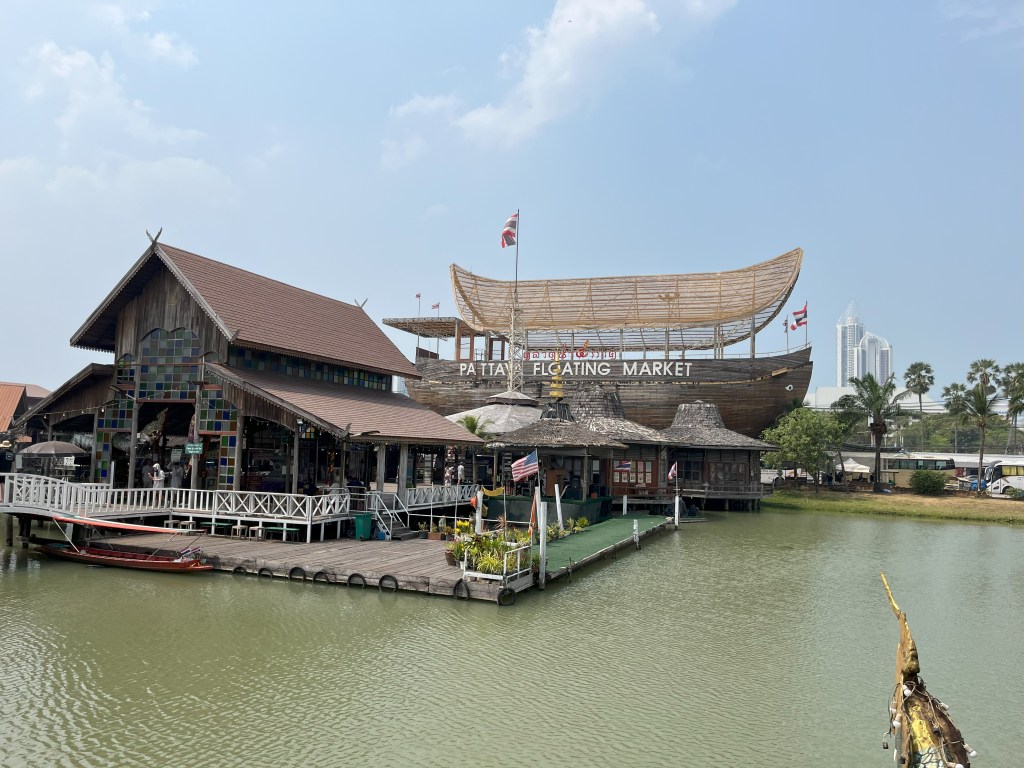
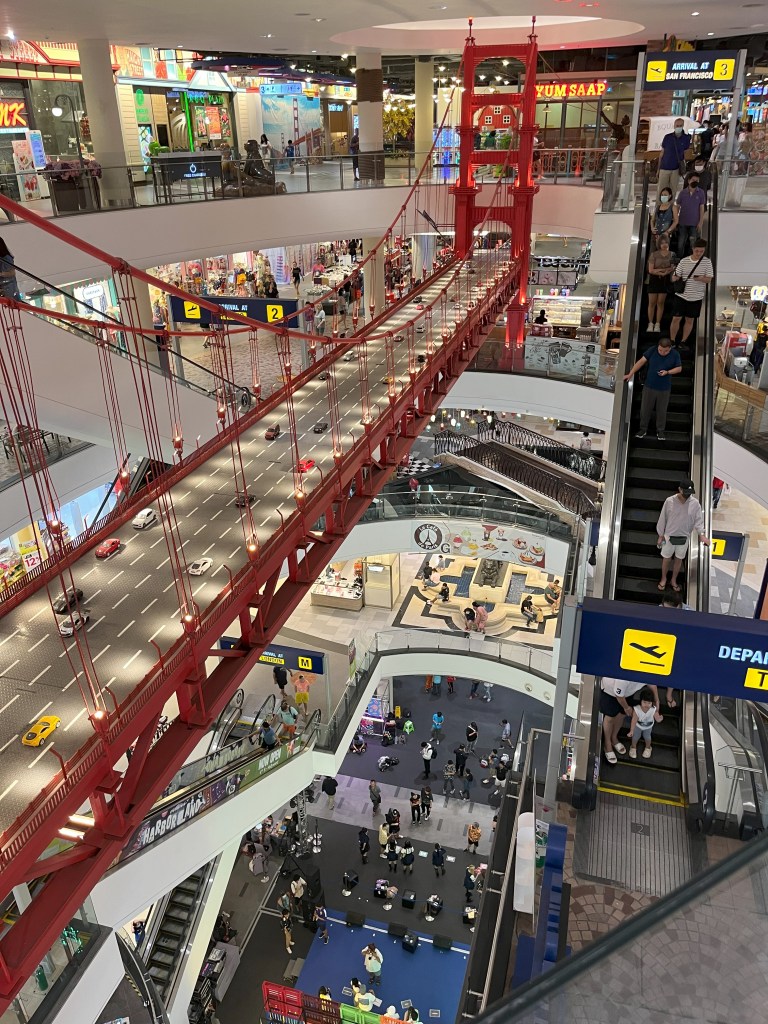
We visited Pattaya, the second-largest city in Chonburi province. Pattaya had round-the-clock entertainment, eateries, and numerous hotels to explore, and the water was warm. It had an active beach scene, numerous street vendors, and a 5-floor mall that was quite impressive. We sampled various foods from the vendors, explored the markets, and some of us watched the sun set over the ocean from a roof-top hotel bar. Another day we visited the floating market, a series of structures and shops that are all floating on a wetland. There were 4 of us that indulged in 2-hour massages with hot compresses and herbal tea at the end. The massages were quite nice, but I didn’t expect to be that sore from the massage the day after.

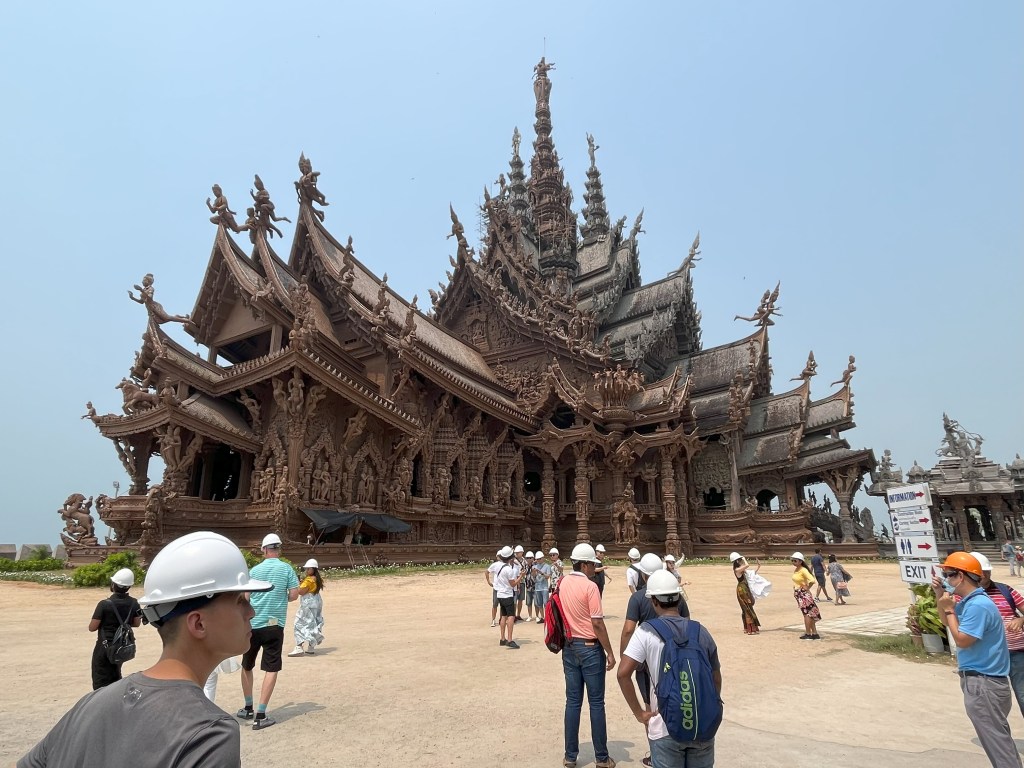
We ventured to the Sanctuary of Truth, an unfinished museum, castle, and temple hybrid that has been under construction since 1981 and is not anticipated to be completed until 2025 at the earliest. Of note, the entire structure and its carved sculptures are made entirely from 4 types of wood. The sculptures are hand-chiseled, and one can watch artisans at their craft as part of the tour. Being a Buddhist temple visitors must wear long pants or skirts and shoulders must be covered, but do not fear, rental garments are available. The structure stands some 100 feet tall and has an internal space of nearly 23,000 square feet. It was impressive to say the least, but the inner firefighter in me acknowledged that if a fire were to ever start in this entirely wood un-sprinklered structure, the whole thing would go up in flame and be destroyed.

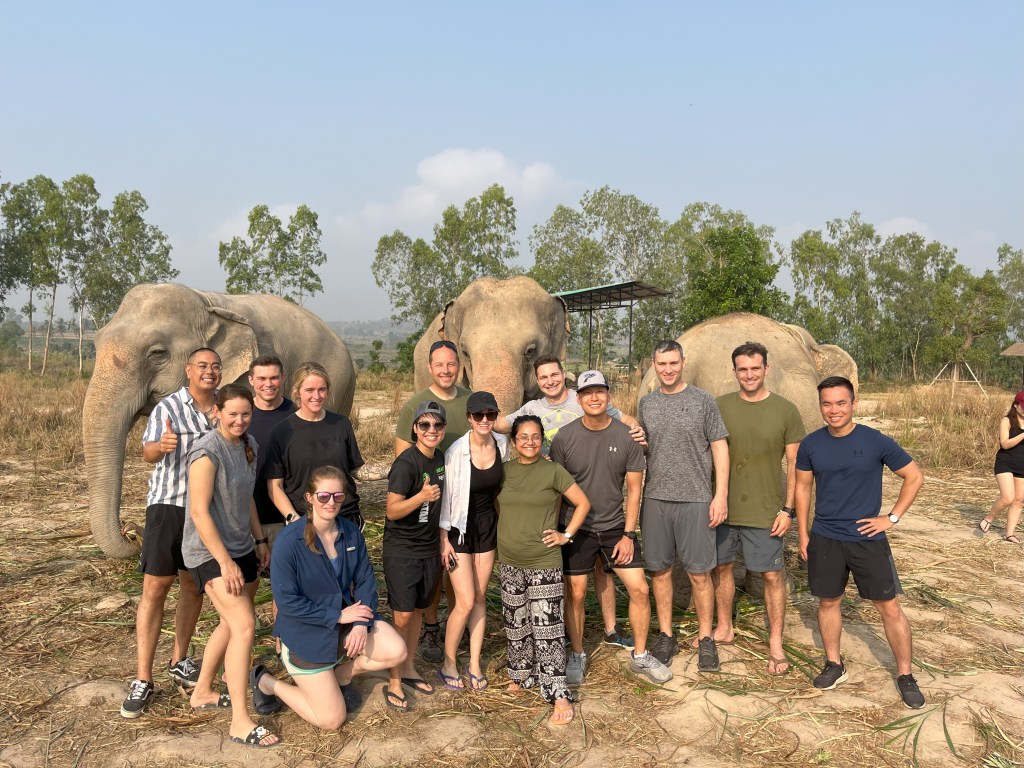
One of our members was able to schedule a group outing for us to an elephant sanctuary. We learned about these giants, fed them cucumbers and bananas, slathered them with mud, and washed them clean in a large pool of knee-deep water. At the conclusion of the half-day spent at the sanctuary we were fed a variety of local dishes and fresh fruit for lunch. It was really awesome interacting with these elephants in a more natural environment than a circus or zoo exhibit.

Overall, I really enjoyed my time in Thailand, and the Thai people were very gracious hosts.

Underwater Pumpkin Carving

By Kevin

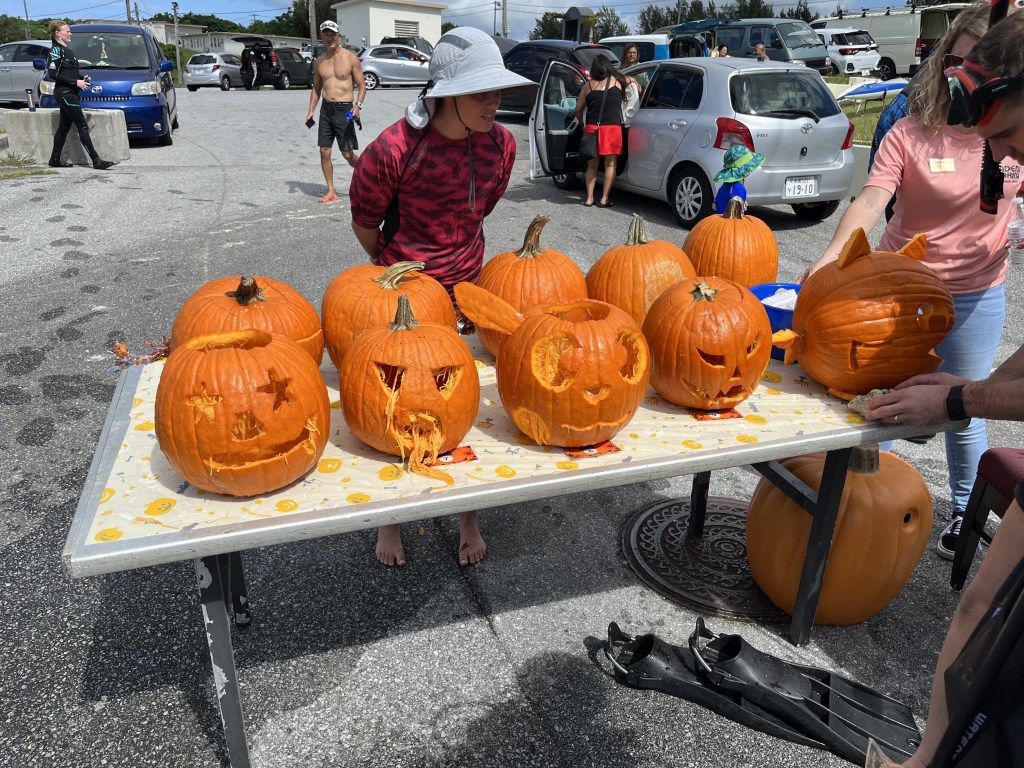
Since arriving in Okinawa, Japan I have been able to complete scuba diver certification, and enjoying the underwater world so much, I have also encouraged Heather, Pie, and Bug to become certified as well. These certifications have opened up a whole new world of experiences and opportunities for us. One of which has been underwater pumpkin carving. On a sunny Saturday in October Bug and I met the other 9 teams at Kadena Marina to compete. Once the first timer started we were able to cut a lid, remove the seeds from inside the pumpkin, and use a grease pencil to mark our design on the outside of the pumpkin. We were then issued an ice pick and a butter knife to complete our pumpkin. We geared up in our scuba kit, made our way to the water and descended to about 12 feet below the surface where we had 30 minutes to complete our pumpkin carving. This, of course, added some new degrees of difficulty. We had to keep a hold of the pumpkin to keep it from floating up to the surface, we had fish swimming through feasting on the discarded chunks of pumpkin, and we each had a scuba regulator in our mouth, so we could not speak to each other. We had to use hand signals and gestures to coordinate our carving efforts. The judges swam back and forth checking on the teams to ensure we were not cheating by adding extra dive weights to our pumpkin to keep it on the bottom, by using un-approved carving tools such as dive knives, or any other unfair advantages we may have thought up. At the conclusion of the 30-minute time limit we surfaced and made our way back to the beach. Our pumpkins were displayed and judged, and while we did not take home the trophy, it was an enjoyable unique event that many of Bug’s peers have not had the opportunity in which to participate.

Manza Ocean Park

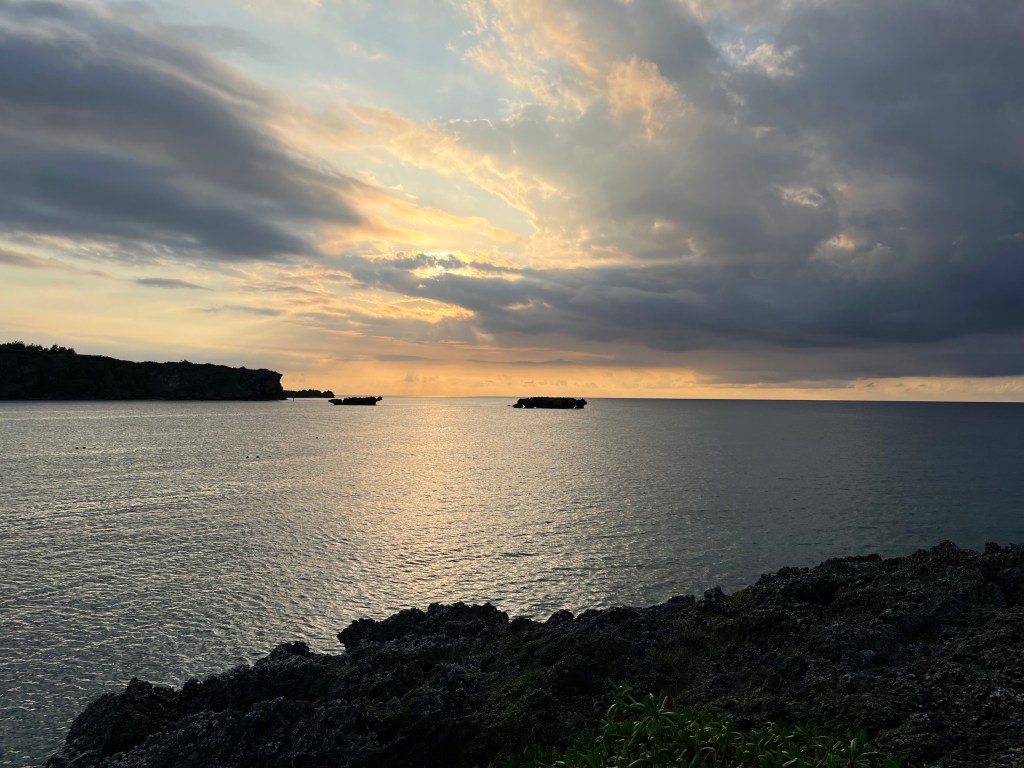
There are many water activities on the island of Okinawa, and while we have experienced many, we had not yet experienced Manza Ocean Park. This floating playground is comprised of multiple inflatable structures secured together and anchored to the sand with heavy concrete anchors along one of the island beaches. The structures vary from things one must climb over, climb through, and climb under while not falling into the surrounding waters. Some have swinging balls one must navigate around, which can be used to send a family member into the water if they are not paying close enough attention. The water under this course of inflatables is deep enough to not hit bottom if you fall, but shallow enough that an adult can touch bottom for about 1/3 of the course. This ocean park is operated and maintained by a hotel that is adjacent to the beach. We arrived mid-morning and played around on the structures for a few hours. Bug was like a little monkey bounding around the structures at blistering speeds. He challenged Heather and I to catch him, but we were hard pressed to do so. For lunch we dried off and walked over to the hotel for a 4 course meal that was included in the ticket price for the Ocean Park. After lunch we returned to the floating structures for a few more hours of play before we were all exhausted and the sun was preparing to set. We all dried off and changed into regular clothes but did not leave yet. The park and hotel sits along the west coast of the island and offered some stunning ocean views. We hung around and watched the sun setting over the ocean before piling back into our van and heading off to dinner.

It was a highly enjoyable day for all, and definitely wore all of us out. For anyone wanting to come to Manza Ocean park, I would suggest purchasing tickets ahead of time as they do sell out, especially on the weekends. Some of our neighbors decided to swing by while we were there, but were turned away due to being sold out. The structures themselves certainly would have supported more people, but the dining venues at the hotel limit the maximum tickets per day. I guess a collateral perk is that the play structures are never really overcrowded due to this limitation.

40 Days and 40 Nights of FEML

While we have certainly have enjoyed the people, places, and experiences we have had living in Japan, one drawback has been the ever-present COVID restrictions. While in the states life has regained at least some degree of normalcy, in Japan daily mask wear is still the norm and travel restrictions are still in place. That has meant that if we wanted to take leave in the continental United States (or other nations) we would have had to quarantine in Tokyo for two weeks upon our return (and on our own time and dime) prior to flying on to Okinawa. This has severely limited our ability to travel. It also meant that none of our family was able to come visit us during our time on Okinawa. Well, the military was certainly aware of all this and those in higher offices decided to help out. The military, across branches of service, authorized FEML, or Funded Environmental Morale Leave. FEML allows service members and their families to travel via military-contracted aircraft from Okinawa to Seattle, Washington at the expense of the government. Additionally, on our return to Japan we fly directly to Okinawa without the need to stop and quarantine in Tokyo. It was this program that recently allowed us to return to the United States for a visit after over a year living abroad.

Once in Seattle it was up to us to obtain commercial flights to our desired leave location. This sounds simple enough, except that about two weeks prior to our departure from Japan we got a notice that we needed to contact the airline. We went online and found out that our flight had been cancelled and that we needed to reschedule another one. We looked at available options and really couldn’t find one that we could all sit together. The best we could find was a flight that the older two kids sat by themselves and the two little kids were able to sit next to a parent. It was not ideal, but it got us to our destination. The flight was, however, a day after the military flight landed in Seattle, so we called a hotel in Seattle and made a reservation for the night for a room with two queen beds and a pull-out couch (enough for everyone to sleep comfortably). It was then the military’s turn to mess with our travel plans. We received notice about 2 days before we were supposed to leave that our military-contracted flight was delayed by 24 hours leaving Okinawa. This meant that we needed to contact the commercial airline and the hotel to adjust our reservations yet again. This time I called the airline and the most helpful agent (not sarcasm) assisted us in finding a flight that the whole family could sit together despite the website not showing any availability for that flight. Apparently the phone agents have extra magic that is not available on the website. Next we called the hotel, but the suite that we had reserved was not available for the night we now needed. We were able to wrangle a room with a single King-sized bed and a pull-out couch. Our final scare during transit came while we were sitting at the military terminal in Okinawa about 30 minutes prior to our re-scheduled departure. The overhead speakers clicked on and we heard “We are very sorry to inform you…..”. There was a collective gasp from those waiting in the terminal anticipating the worst as we had already been delayed for 24 hours once. Would they do it again?!  “We are very sorry to inform you that your flight departure has been delayed by one hour”. There was an audible sigh of relief from everyone listening. I think that was the happiest we had ever been about a 1 hour delay. The rest of the military flight went without incident.

Our next logistics hurdle came when we arrived in Seattle. Living on a island, almost all of our mail is flown in. This, however, means that certain items are restricted from delivery to include lithium batteries due to their risk of spontaneous fire. This in turn means that unless one desires to buy a Japanese cell phone it is almost impossible to upgrade one’s phone while overseas. With the recent Sprint/T-mobile merger both Heather and I needed at the least a new SIM card if not a new phone for our service to continue working. Well, the towers in Japan continued to work perfectly for us despite our “outdated equipment”, but upon landing in Seattle our iPhones were reduced to iPods. They were unable to access the cellular network at all. That meant that we had to figure out how to contact the hotel shuttle to come pick us up from the airport. Since practically every adult (and most of their kids nowadays) has a cell phone the need for payphones has all but died. That left us in a predicament at the airport as we had no cell service and there were no payphones. After some asking around, we found out from a customer service agent that there was a courtesy phone in the parking garage that would only call pre-determined hotels and cab services. It was like living in the 90s again. I don’t say all this to complain. After all, we had just been given thousands of dollars worth of airfare funded by the U.S. taxpayers. It just makes us appreciate thing we take for granted sometimes like jumping on an airplane to visit grandma with our only inconvenience of turning our devices to airplane mode while on the plane. Anyways, we were able to contact our hotel and the shuttle came to pick us up. Now, living in Japan for over a year driving on the left side of the road with the steering wheel on the right side of the car made riding in the front passenger seat in the states feel really weird! Once at the hotel we all collapsed for a 2 hour nap before venturing out on foot for dinner and new SIM cards so our cell phones would work again.

Once we made it back to Ohio to visit family, we certainly made our rounds. We were in the states for a total of 40 days, during which we made many stops. We visited Malabar farm to interact with farm animals and enjoy the vendors that were set up for their Farm Day celebration. We enjoyed the water slides and wave pool at Cedar Point Shores water park. We felt the thrill of riding some record-breaking roller coasters at Cedar Point amusement park. We visited the many animals at the Columbus Zoo. We also got out to enjoy nature for a while by taking a hike in the woods along the shores of the Mohican dam and river. Just prior to our arrival there had been quite a wind storm in Ohio, so we also spent some time helping Heather’s family get downed trees cut up with a chainsaw and some brush burned. I also spent some time on the tractor with the bushhog getting a field mowed. While I don’t mind the city, I do enjoy working around the farm still, and this was my opportunity to help out with some tasks that had been neglected.

While we were in the states I had the opportunity to fly to Texas and spend 10 days attending Combat Casualty Care Course. This course taught and reinforced the skills needed to care for patients in a military combat setting. The class completed classroom instruction, skills stations, and field exercises that allowed us to test our new skills through practical scenarios. My classmates were a mix of not only Navy personnel, but also Army, and a few foreign military medical exchange students from Korea and Germany. If any military medical personnel are reading this and are able to attend, I would highly suggest seizing the opportunity! At the conclusion of the course I was able to meet up with a fellow Navy nurse that I had worked with in San Diego that was attending a different course of instruction in San Antonio, and the two of us roamed the San Antonio River Walk, had a beer at the oldest Veterans of Foreign War (VFW) post in Texas, and ate some true Texas barbeque before departing for our separate destinations. The longer I am in military medicine the more people I know stationed all over the world and the more I am able to take advantage of meet-ups like this one.

Luckily the return trip from Ohio to Seattle to Okinawa was without issue and went as planned. No more logistics issues were encountered enroute. We certainly were thankful for the opportunity to visit friends and family in the states, but at the same time there is just something nice about being back in our own house and sleep in our own beds. While away on this trip, I had learned that I had been selected to lead a new section at work, so I had plenty to learn and get caught up on as I settled into my new work routine and position.

Okinawa Salt Factory & 4th of July Festival

by: Kevin

Okinawa Salt Factory

        Okinawa does not have a raging economy due to its limited ability to manufacture and export large quantities of goods like other areas of the world. However, that is not to say that Okinawans have nothing. They grow sugarcane, blow glass, sculpt pottery, and make salt to name a few businesses on the island. We ventured out to the Nuchi Masu salt factory to see whether it was “worth its salt” as they say. The factory is perched atop a rock face on Miyagi island, a small island connected by bridge to Okinawa. The factory pulls seawater from the Pacific Ocean into the factory and sprays it through a special fan system. The water dries in mid-air and the remaining salt falls to the floor like snow. Unlike common salt which is simply NaCl, The makers of Okinawa sea salt claim many health benefits due to its 21 minerals and elevated concentration of magnesium and potassium. According to the lab analysis printed in their brochure only 73.3 grams of a 100 gram sample is NaCl, which has led them, according to their brochure, to winning multiple awards and prizes for their salt including a spot in the Guinness World Record book. While there, we could look into the salt drying room that appears to be covered with “snow” as well as the ability to peer through skylights into their lab and packaging rooms. It was a pretty short tour, but worth the stop while we were out exploring the small islands connected to Okinawa by bridge.

4th of July

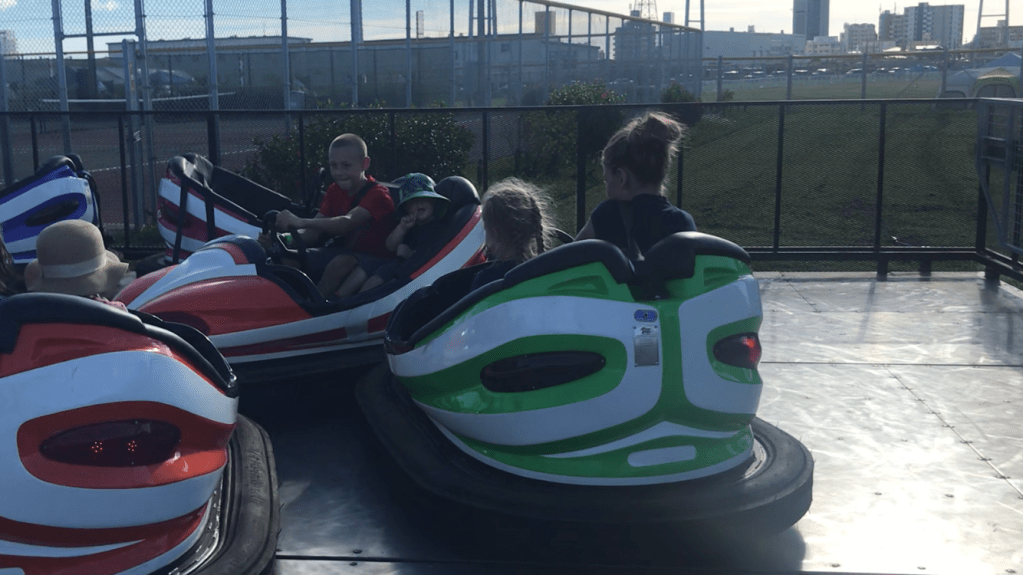
In celebration of Uncle Sam’s birthday, the Marine Corps held a two-day festival open to all US military on the island. This was a welcome relief as we start to emerge from Corona virus restrictions of the past year. We tried some Japanese yakisoba noodles, had the traditional American burgers and hot dogs, snow cones, and even had some barbeque brisket to round out our culinary samplings. They were all delicious! The kids got to ride, bounce, swing, and jump through kiddy land rides and we met up with some neighborhood friends for a while as we walked through the festival. While we were there it came time for retreat to be played and the American flag to be lowered for the evening. While I have been in the military now for over three years, this is our first time living on base and spending so much time on base. Pie, our oldest child, was stunned when the bustling crowd of a few thousand people came to a complete halt and all faced the trumpet music with patriotic reverence. While retreat is played nightly on base, to see an entire festival come to a complete standstill within mere seconds was impressive.

We elected to make a strategic exit prior to the fireworks because we knew we could see them from our own base, and by leaving before the fireworks we would avoid all the traffic congestion after fireworks. The weekend was dry, but hot. We all got a bit pink from the sun (a welcome change from the near-constant rain over the past few weeks), but nobody really burned. We watched the 20 minute fireworks show from our lawn chairs at the top of a hill overlooking the military housing community in which we live. Being stationed overseas it is also interesting to see the divergence of Americans from the Japanese. For the Americans it is a major federal holiday. For the Japanese, it is just another weekend. The people-watcher in me noted the difference in activities between these two groups.

            On Sunday of the long weekend we attended a backyard cookout hosted by another family in our neighborhood. We enjoyed a mix of American and Filipino food and some good company. The night was topped off by the kids swimming in inflatable pools, playing with squirt guns, waving sparklers, and watching an outdoor movie projected on the side of a house. We were treated to a second night of fireworks, this time from a different military base in the area. Heather and I concluded that we really did pick our housing option pretty well for this tour as we love our military housing community.

Weekend exploring

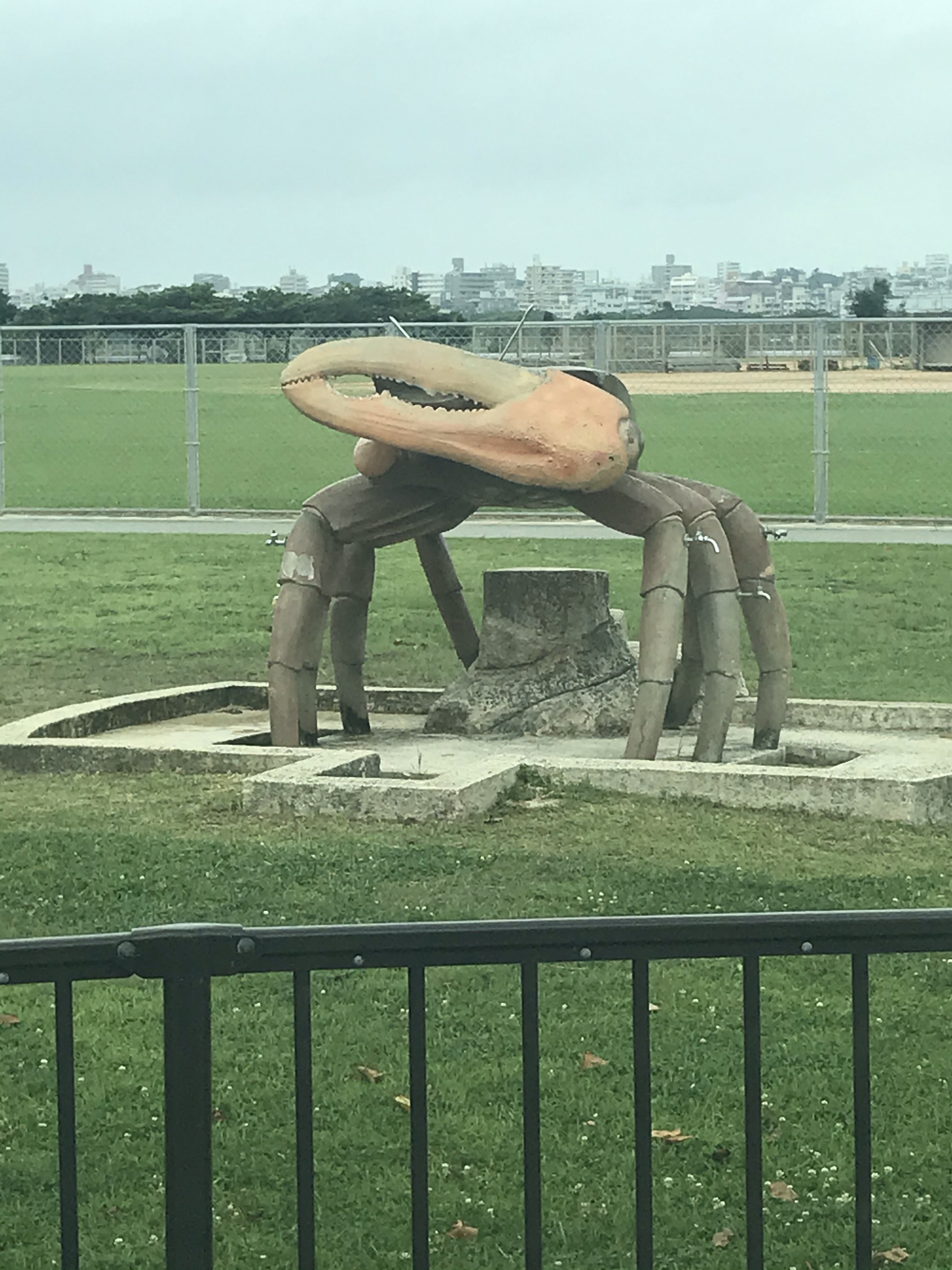
Over the Fathers Day weekend and newly minted Juneteenth federal holiday we were able to get out and explore the island some more. We took a drive around Senaga Island, a very small island accessible from Okinawa by bridge from Naha, one of the larger cities on the island’s south end. One can drive around the perimeter of Senaga Island in less than 5 minutes. Covid is still very much a thing here on Okinawa, so many of the shops and eateries on the island were closed. However, it has some nice beaches and a crab-themed park that the kids enjoyed.

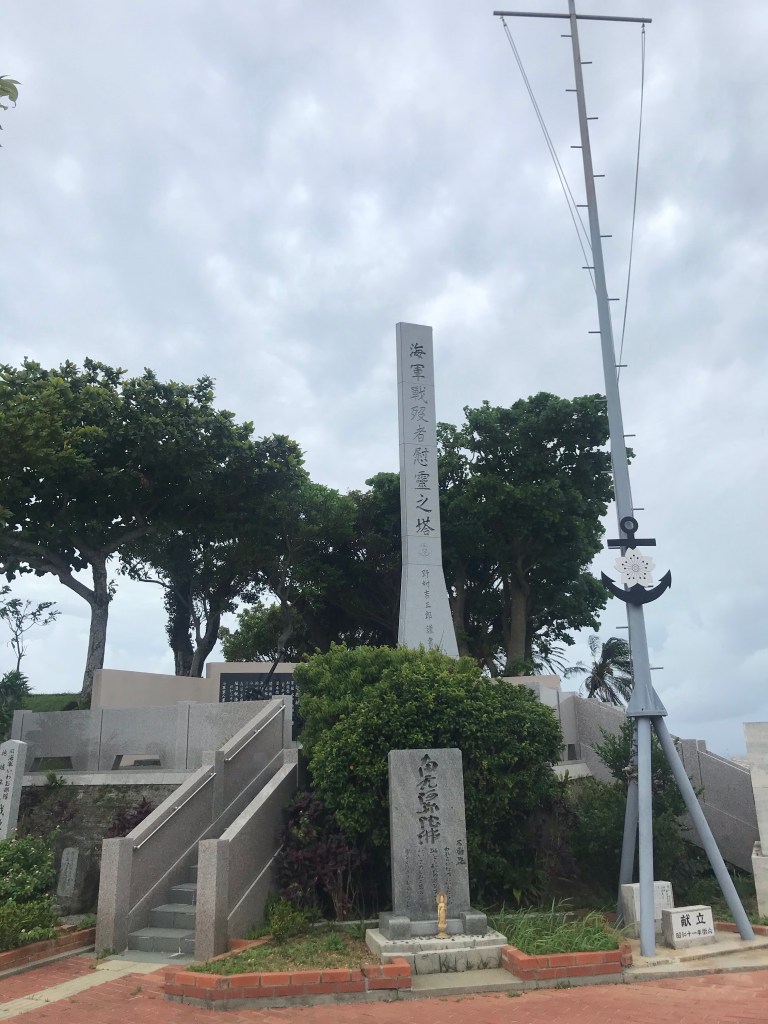
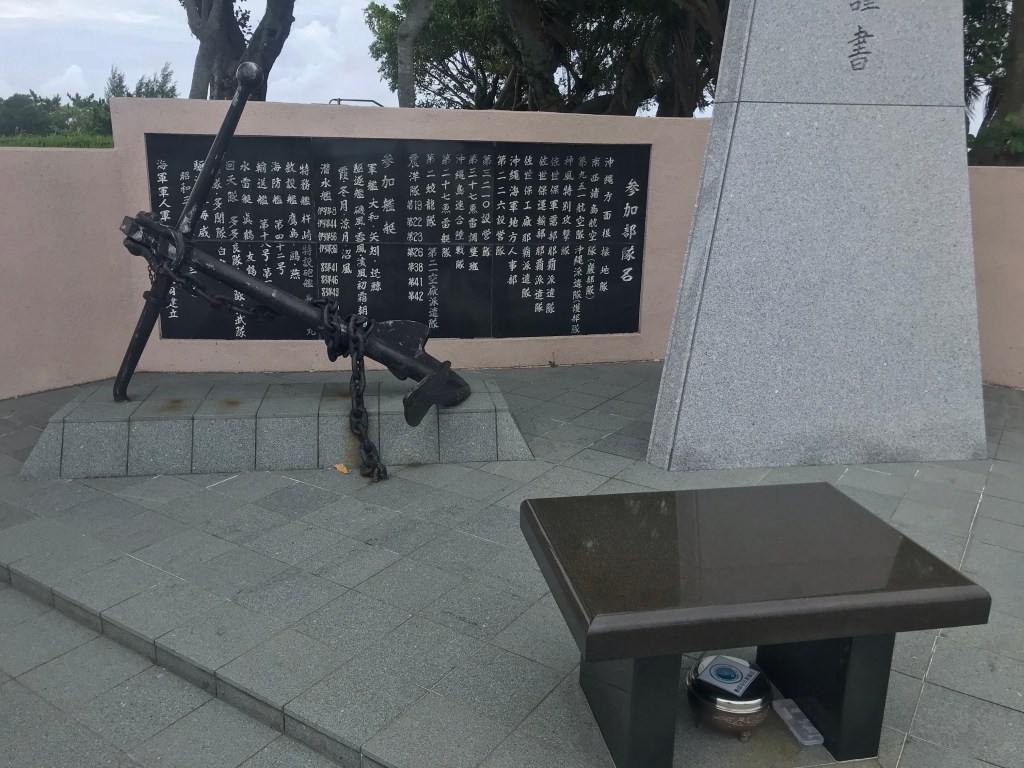
In the central region of the island we visited the location where the U.S. Marines and Navy made their initial landfall on April 1, 1945 to start the battle of Okinawa during World War II. This small memorial marker overlooks the beachhead and river wash where the amphibious vessels delivered their soldiers and loaded casualties to be returned to the ships off the coast for treatment.

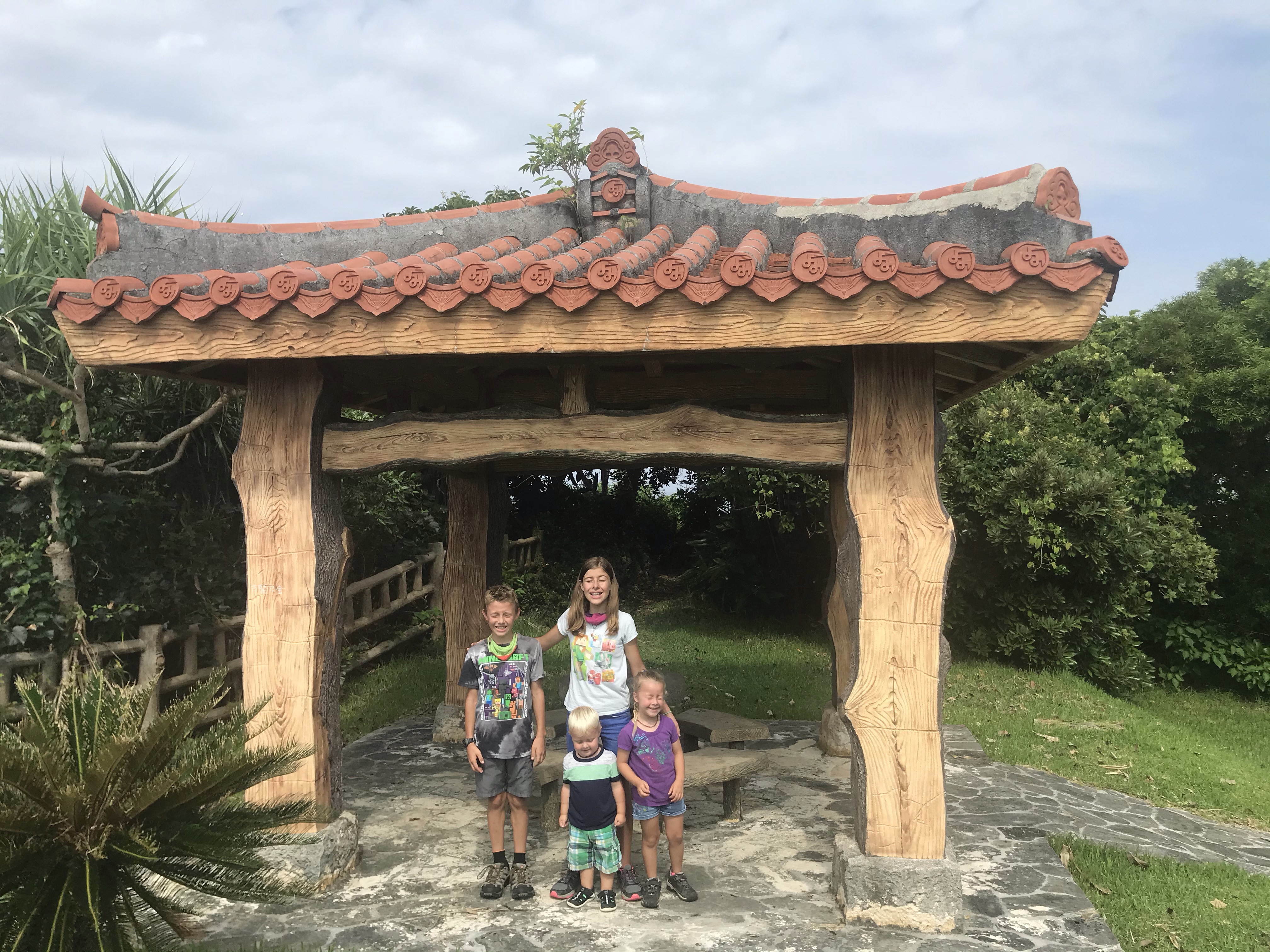
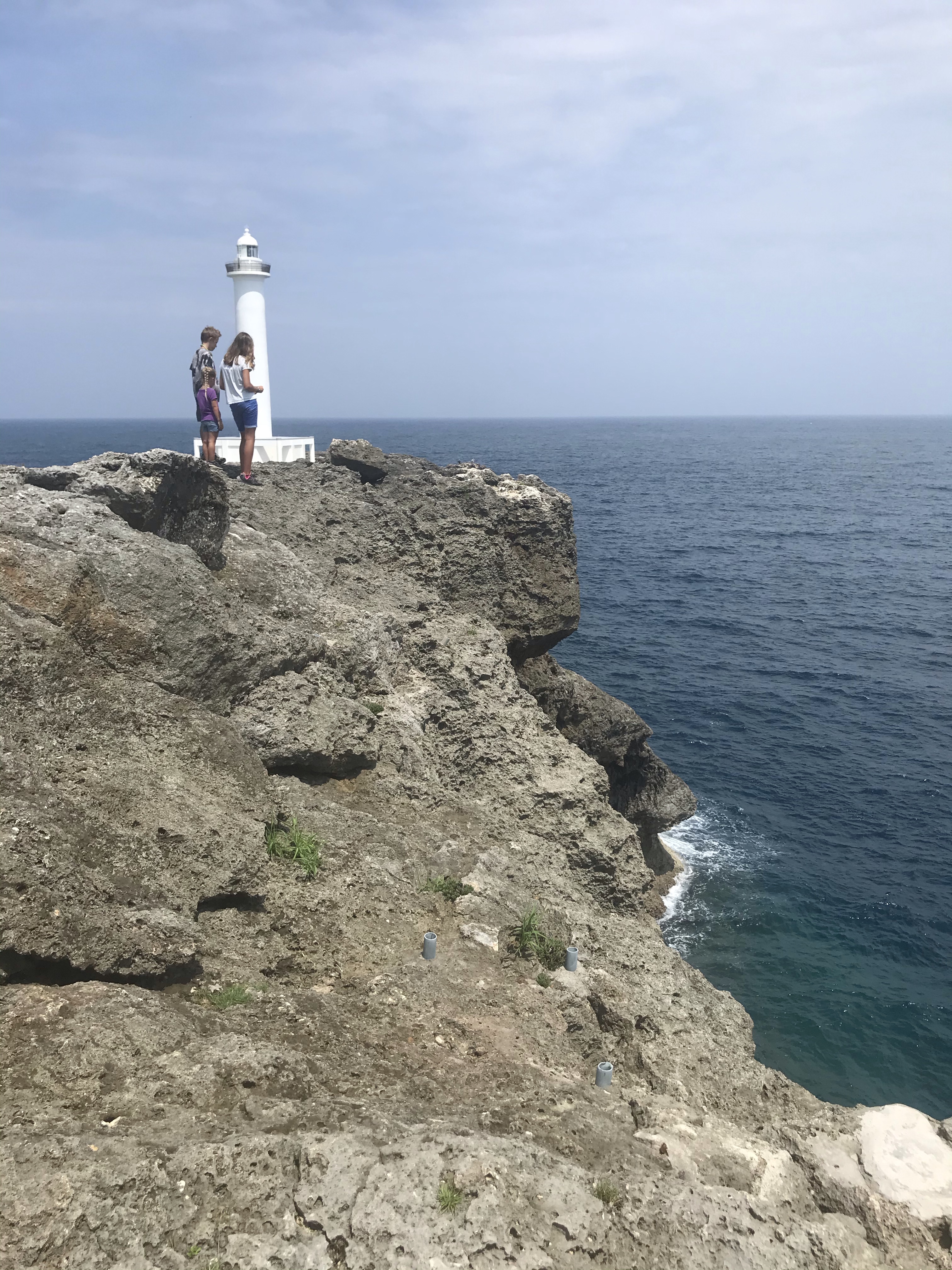
Heading north on the island we found the Cape Zanpa lighthouse, some pretty impressive cliffs along the ocean, and the self-proclaimed largest Shisa on the island. A Shisa is a traditional Ryukyuan decoration which is a cross between a lion and a dog and is supposed to ward off and protect from evil. They can be found on the rooftops or flanking the entrances to homes and businesses all across the island. Even the military commissary has a pair of Shisa out front. Typically the one with an open mouth is on the right while the closed-mouth creature is on the left. While I am not so sure about their protective powers, I did purchase a set to place above my desk as a decoration and keepsake from the island.

Speaking of these Shisa figures, I found my set at a local pottery village. This grouping of pottery shops and storefronts feature handmade dishes, tea sets, Shisa figures, and other items for sale. We liked that they are all locally-made and not commercially manufactured. We spent about 2 hours looking through all the shops. Along the way we also found a steel-roofed shelter where we found local glass tradesmen at work. We watched them start by extracting molten glass from a blast furnace and then shaping, blowing in the end of the metal rod to expand the center of the glass bulb, and re-firing and re-working the hot glass for almost 30 minutes until they had completed a multi-colored glass vase. The final step was to place it in a special kiln for annealing over an extended timeframe. The kids (and adults) were entertained and impressed by the skill of the tradesmen in the shop. While it may not be on the tourist bucket list, we were very happy we got the opportunity to watch them work.

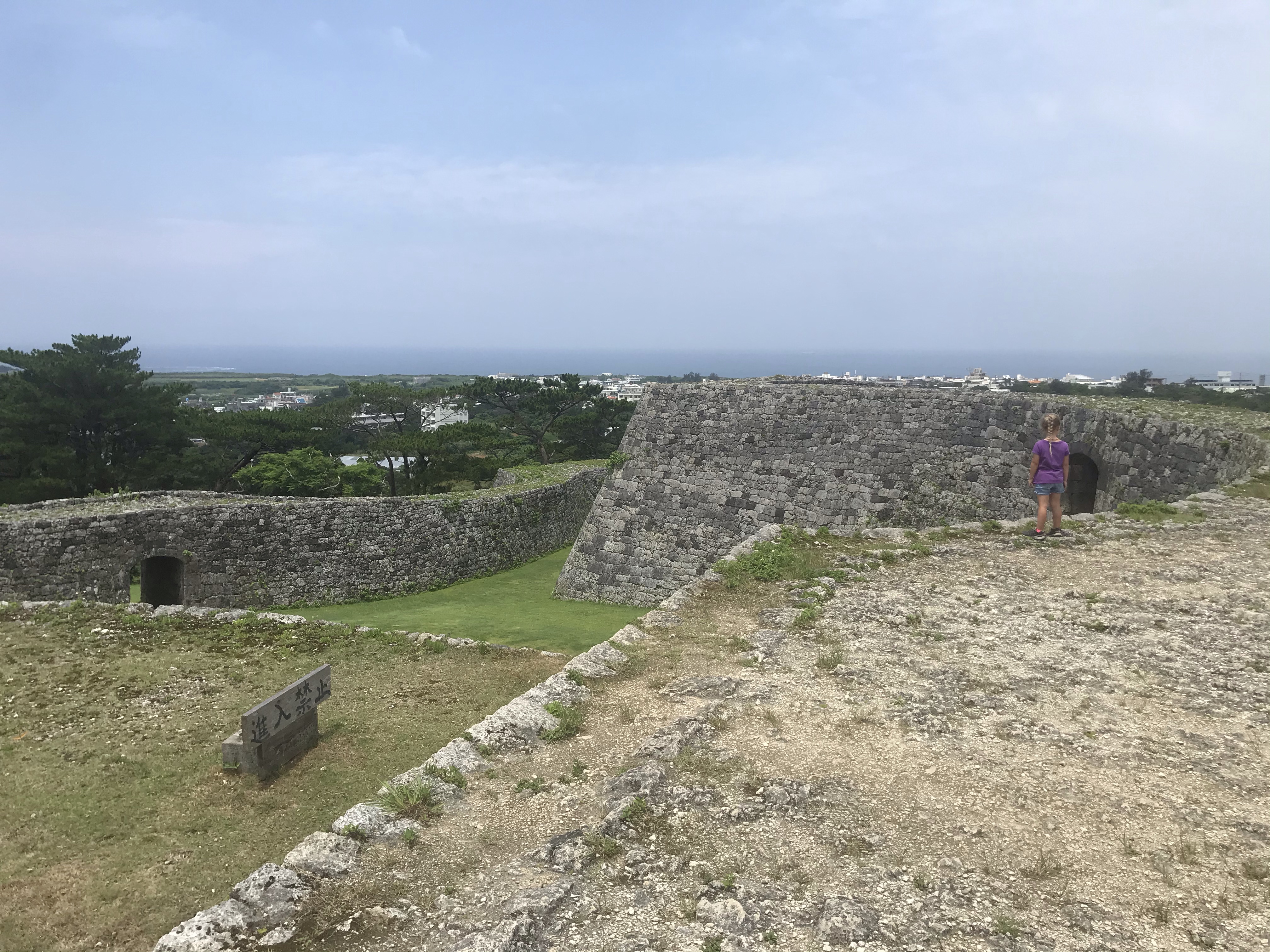
Our last stop along our journey for the weekend was to visit the Zakimi castle ruins. This green space and park contains the ruins of castle walls which was once a great castle. It was impressive to see how tightly the stones of the wall were fitted together, even without the use of mortar to form a tight, flat wall to protect the castle. The view from atop the castle walls was equally impressive and the breeze was a welcome change to the hot and humid weather of the day.

Aspects of Living abroad

Living in a foreign country has been an adjustment for all of us. We knew it would be an adjustment when I chose orders to Japan, but we wanted to meet the challenge. Here is a little of what we have learned and/or experienced so far during our past two months on island.

Driving

Driving is different than in the United States. First off, the driver is on the right side of the vehicle, and one drives on the left side of the road, like in England. This is opposite what we have been used to in the states. I will admit I did pull out from a stop sign once during my first week behind the wheel and automatically went to the right side of the road…oops! Luckily it was on base and there wasn’t any traffic, so I was able to correct myself without any additional issues. In addition to the steering wheel on the “wrong” side, the levers for the turn signals and windshield wipers are on opposite sides. This has been a harder adjustment for us and both Heather and I have given the “Okinawa wave” as fellow service members call it by hitting the windshield wipers instead of the turn signal lever. This apparently is a classic American mistake. On the bright side, the pedals are on the same side as in the states, so the right foot is still the gas pedal, so at least we don’t have to learn to drive entirely backwards. The final major difference in the vehicles here is that the speedometer is in kilometers per hour instead of miles per hour. The speed limits on island top out at 60kph unless on the toll freeway. This equates to a whopping 37mph. If you have a “need for speed” Okinawa is not really the place for you unless you happen to fly a jet. However, it does allow for some leeway since everything occurs at a slower speed. Instead of trying to figure out which lever to use for turn signals at 80mph, it’s a lower 37 mph.

            In order to drive in Japan as U.S. service members we were required to pass a written exam on Japanese road laws and signs. We had a study guide to prepare, and both Heather and I passed on our first attempt. Once out on the open road one must decode the local road signs. The major signs are primarily in picture form along with Japanese and English text. This not to say that all signs are bilingual however, so there are plenty of signs and pavement markings that we have no idea what they mean. It has not caused a problem yet, but has made me more aware of the struggles foreigners living in the U.S. must go through if they are not proficient in the English language.

            Another aspect of driving that is different is the use of emergency lighting by the police. In America if a police car behind you has its red flashing lights on, you had best pull over. In Japan flashing lights simply means the police are on patrol and can be completely disregarded unless they activate their siren which means to stop. One interesting note is that the lightbar on top of American police cruisers are typically mounted very close to the roof of the car. Sometimes this is for aerodynamics, sometimes to try and blend in with other traffic. In Japan the lightbar is mounted high above the roof on a fiberglass pedestal to raise the lights above the height of other vehicles for increased visibility. When stopped these pedestals extend upward with a scissor-type lift to further raise the lights for visibility. With these features it is probably apparent that the police do not really “hide” much. Another thing they don’t do much here is run speed traps. There are numerous speed cameras mounted over the roadway on metal pole structures which control motorists’ speed. The cameras are, according to multiple online sources, set to trigger around 30kph over the limit. While I do not have any first-hand experience with it, it is said that the fine if caught by these cameras is pretty steep. With these cameras positioned all over the place most drivers keep it within 10-15kph over the limit, which seems to be the normal speed of traffic in town. Those that choose to zoom around will receive a ticket in the mail as these cameras snap pictures of their joy ride.

Purchasing fuel on Okinawa is a little different than in the States. First, one must decide to purchase gas on-base or off-base. If buying on-base there is one gasoline option: 85 octane gasoline sold by the gallon. They also sell diesel on base, but none of our vehicles use it. The vehicles and our lawn mower all seem to run just fine on 85 octane fuel here. If purchasing fuel off-base there are two gasoline octane options, 90 and 98, however it is sold by the liter not the gallon. When compared in equivalent measures, off-base fuel costs around three times the amount of on-base fuel. Noting this, we make it a point to fuel up on base as much as possible. This has been fairly easy since the island is only about 7 miles wide and 70 miles long, so we can make it from our home in the central region of the island to anywhere on the island and back without refueling.

After watching some movies one may have the impression that all the cars here are “rice” cars with loud mufflers, sit low to the ground, and are wide in stance. That is certainly not the case, at least on Okinawa. I have actually seen this style of car the most ON base and not driven by locals. Largely the vast majority of cars are small and narrow. We have one of the largest vans on the island and it could be described as a roomy minivan by American standards. Large SUVs and pickup trucks are simply not a thing here. We are glad we did not attempt to bring our Ford Transit van as it would not have fit well here. The roadway lanes are more narrow and parking is a significant problem here. In fact, to purchase a car in Japan one must provide proof they have a place to park it before being allowed to purchase the vehicle. The malls and larger businesses have plenty of parking (mostly on the roof and in parking garages) but visiting small businesses can be a challenge because there really is nowhere to park in the immediate area. When we were looking for a church to attend on island, one of the things we looked for was if they have a parking lot or not.

Operational Security

Those who have been around the military know that keeping a low profile and blending in can be of benefit to limit risks while overseas. While this may be the case, since US military bases occupy 25% of the island paired with the fact that our license plates actually denote that we are Status of Forces Agreement (SOFA) personnel, this has proven more difficult on Okinawa. This of course, is in addition to the fact that I am taller than every native citizen I have come across so far. Luckily Japan is pretty U.S.-friendly and this is less of an issue than some other countries that come to mind.

Broadcast Media

Living on base we have cable internet that is provided through a vendor for the Armed Forces Network. We have 8 free channels along with our desired (paid) internet access package. The free channels offer a good mix of sports, entertainment, and news. I have actually been pleasantly surprised with the amount of baseball I have been able to watch this season. We could purchase an additional cable TV package, but we stream a lot via other media services so we do not have a large need for cable channels. I will say that watching TV here is not really the typical American experience though. As the programming is provided in conjunction with the military, there are not typical commercials. Instead the commercial breaks are filled with advertisements for on-base services such as the Officer’s club, the various pools on base, and infomercials related to water safety, Covid-19 vaccines, weather, and typhoon preparedness. On a related note, we have found exactly one radio station that is broadcast in English, and you know what? You guessed it, it is broadcast by the U.S. military from a station on one of the local bases. As far as media goes, even though we are living in a foreign country, we are firmly rooted in American media. If flashbacks to “Good morning Vietnam” with Robin Williams come to mind, you are probably not too far off track.

Money

Another aspect of life we have had to adjust to is the money system. The Japanese use the Yen, which is roughly equal to a penny. Paper notes consist of 1000, 5000, and 10000 yen bills and coins for 500, 100, 50, 10, 5, and 1 yen. When calculating the rough cost in US dollars one just mentally moves the decimal two spaces, so 1200 yen is approximately $12.00. It is kind of fun going to the ATM though, because you feel really rich when withdrawing 40,000 yen (Approximately $400). For anyone coming to Japan in the near future, I would advise you to use ATMs off-base for acquiring Yen instead of on-base ATMs. Even with the 1% international fee my bank assesses the conversion rate between dollars and Yen is much better off base. We have found that we need to keep both dollars and yen on hand because on base transactions use dollars and off base transactions require yen. Yen is also important to carry as many businesses do not accept American credit or debit cards.

Vending machines

Vending machines are literally everywhere! As long as you have some yen in your pocket you will never be hungry or thirsty due to non-availability of refreshments. Leaving the pool after a refreshing swim? 3 vending machines along the sidewalk. Inside the military health clinic? 4 vending machines. Taking a walk around the abandoned old Navy hospital? You guessed it, 2 glowing vending machines positioned along the chain-link fence. Taking a drive through the sugarcane fields? Yes, even here one will find an operational vending machine on a pallet to keep it up off the dirt. These vending machines are packed full, but not full of just soda. They offer multiple coffees, teas, waters, juices, and a few select sodas. Other vending machines offer ice cream cones, eggs, hot food, beer (Japanese ID required), umbrellas, batteries, or facemasks should you have the need. While I have not seen one in person, Japan even boasts that they offer covid-19 testing swabs via vending machines, although I am not sure how the swabs get processed once obtained.

Weather

            I think I could sum the weather up in two words: hot and humid. While Japan mainland has more changing of the seasons, Okinawa is pretty much hot and humid most of the year with winter lows only dipping into the 50s. Just yesterday by 10am it was 92 degrees with a heat index of 119. Needless to say during the summer many people spend the heat of the day indoors or engaged in water activities. The housing community is pretty empty during the day but in the evenings as the sun is less intense there is a flurry of activity. With this much humidity hanging in the air the chance for rain is ever-present so the daily forecast is pretty much the same: hot and humid with a 50% chance of rain.

Food

            Living abroad can be a fun experience trying new foods. The ramen here is fabulous! Even the pre-packaged ramen bowls are better than in the states. They come with multiple packets of both dry and wet ingredients that get mixed into the bowl. Heather has taken a liking to the Japanese curry. It is a more mild curry than Indian curry as it is based on the late 1800s British curry. It is served with some sort of protein, sauce, and white rice. It is simple, but pretty good. Out in town meat is more expensive and less available on island than in the states, with the exception of seafood which can be obtained locally and in quantity. Luckily, the military commissary tends to do a decent job of keeping us hungry Americans supplied with all the normal meats from the states, although it mostly arrives frozen due to the long transit time from the states. Due to things being deep frozen for transit there are signs on the freezer doors stating that the expiration date on food packages can be extended by 6 months due to being frozen.

So there is a small taste of the differences one may experience while living abroad. Stay tuned for more posts about our explorations around the island and beyond.

Former Japanese Navy Underground Headquarters

By: Kevin

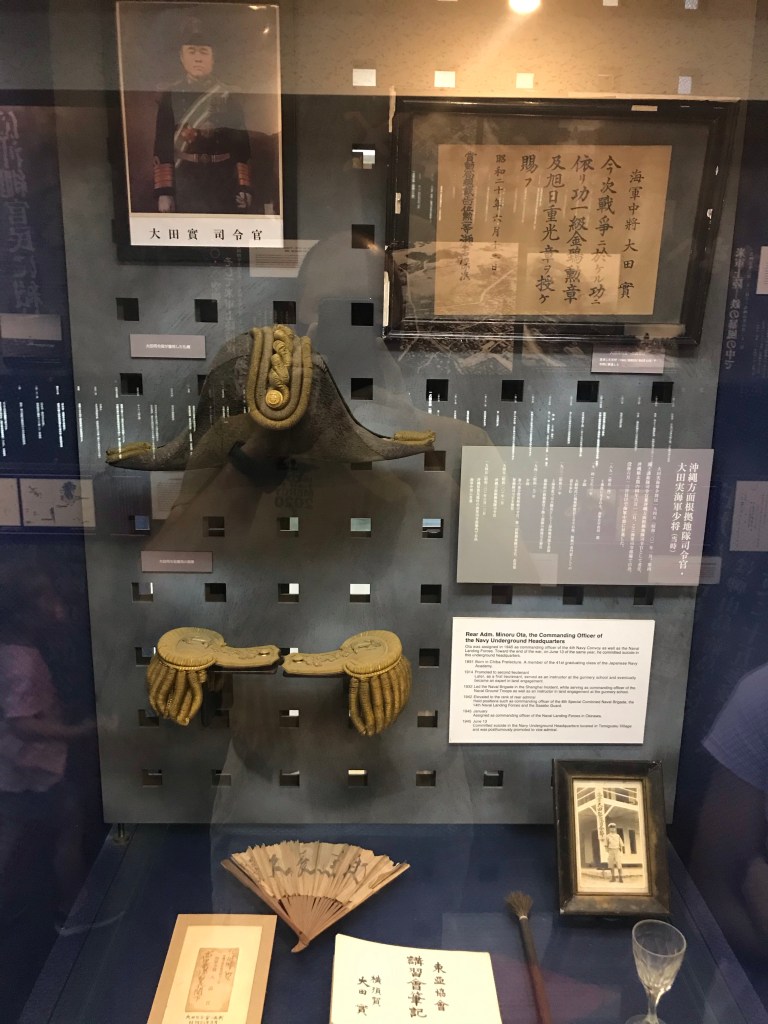
This weekend we ventured to the southern end of Okinawa to tour the Former Japanese Navy Underground Headquarters. It is here where Vice Admiral Minoru Ota made his last stand and ultimately committed suicide so he would not be captured. It now stands as a monument to peace and remembrance.

The battle of Okinawa was among the bloodiest of World War II, lasting 82 days from when American forces first landed on the beaches on April 1, 1945 until June 13, 1945 when Admiral Ota died an “honorable death” for Japan. The total death toll for the battle of Okinawa stands at 12,520 Americans and 188,136 Japanese over the course of the battle. In the tunnels of the headquarters, according to the Sixth Marine Division, 175 Japanese deceased soldiers were found.

The outdoor monument and green spaces are free to tour, but there is a small admission fee for the tunnels and indoor museum. The museum features the timeline of the battle as well as Japanese uniforms and artifacts recovered from within the underground headquarters. Few weapons remain as the Japanese intentionally destroyed them so they could not be used against the Japanese later in the war. While some areas of the museum were in Japanese as well as English, some exhibits are only in Japanese, so the Google translate app on our phones proved very useful. As one starts down the stairs into the tunnels the walls are adorned with Japanese Senbazuru. These hanging paper sculptures are each made from 1,000 tiny origami cranes threaded together into strands of 100. They are gifted for the purpose of conveying prayers for healing and peace.

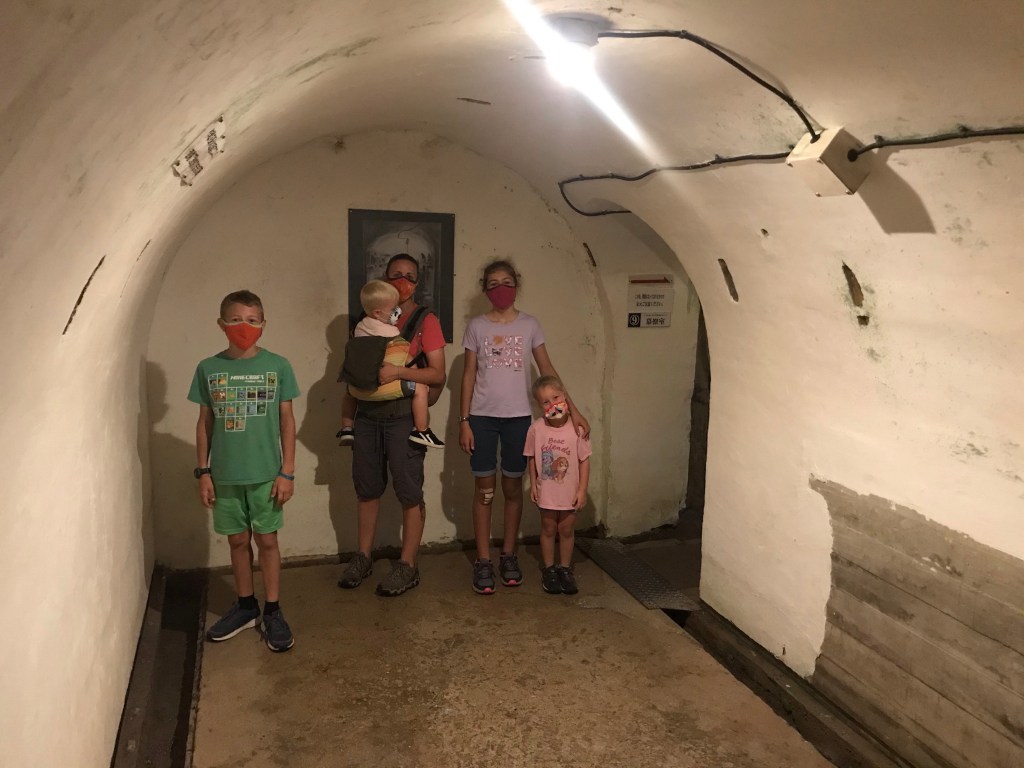
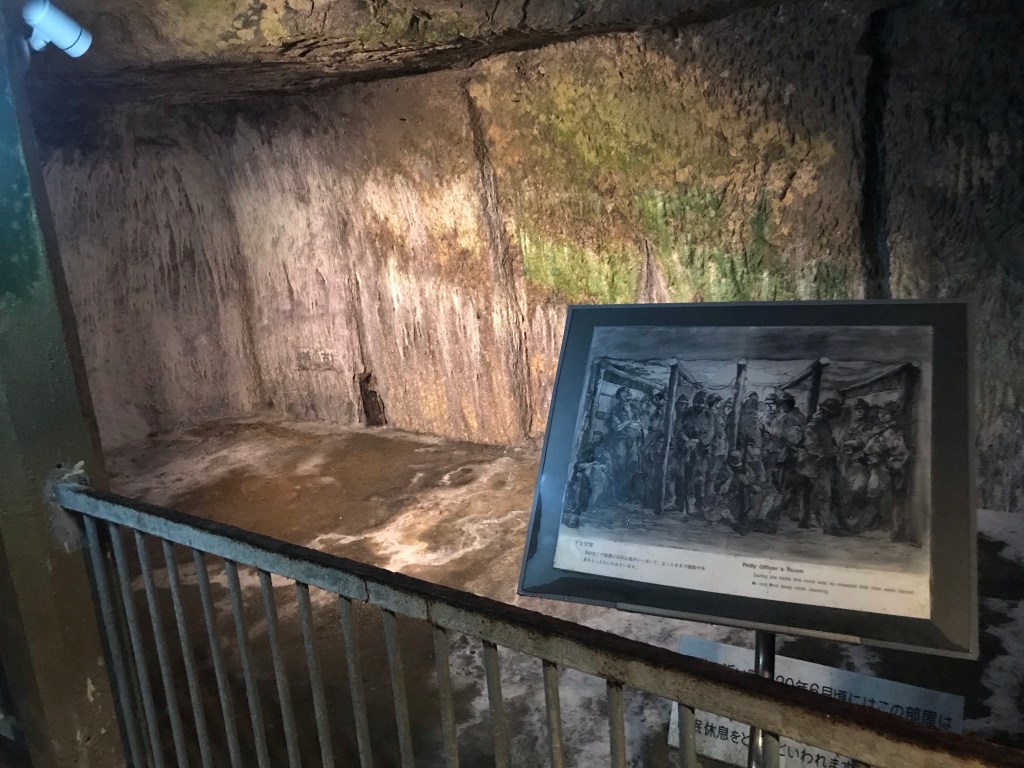
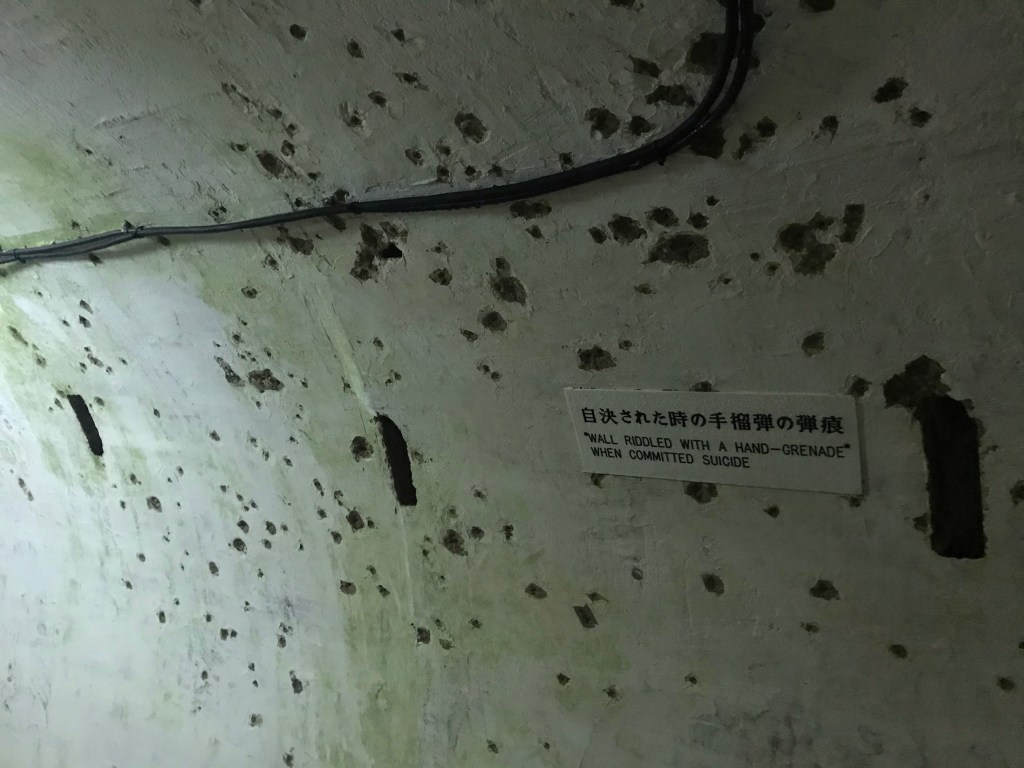
The headquarters consisted of multiple interconnected tunnels and rooms complete with ventilation shafts and emergency exits. The core of the headquarters lies 20 meters (65 ft.) below the surface to protect it from enemy attack. We were able to view the operations room, Commanding Officer’s room, 3 generator rooms, the code room, a staff room, as well as 3 rooms for soldiers. These rooms of soldiers were so tightly packed at times it was said one could sleep standing up. As many as 2,000 soldiers and officers occupied the headquarters during the battle of Okinawa. In one room of the headquarters the walls are riddled with shrapnel scars from the hand grenade that some Japanese leaders used to commit suicide.

Touring the headquarters was very interesting from an exploration point of view, but it also holds additional significance to my family because my grandfather was stationed aboard the USS Edgecombe, a Haskell-class attack transport ship that landed assault troops on the Okinawa beach on April 1, 1945: the first day of the battle of Okinawa. His job as a navy corpsman was to accept the dead and wounded from the beach and provide medical care to them. Of course while he was rendering aid to American soldiers the Japanese kamikaze pilots were strafing the decks of the American ships with gunfire. I remember my grandfather telling me when he heard the planes swooping down he would tuck himself into the side of an I-beam and watch the hot rounds ricochet off the steel ship deck. As I pause in reflection some 76 years later I am an American Naval officer stationed on Okinawa standing in the Japanese Naval headquarters that was so fiercely defended from my grandfather and the Americans who came before me. It really is thought-provoking.

On a lighter note, once we finished our tour the kids played at a near-by park and we tried Japanese curry, which is based on British curry, with a milder spice than Indian curry. Heather and the kids had various beef or chicken dishes while I tried the shrimp & clam curry. It later occurred to me as I was looking at our receipt that mine was the least expensive dish. In the states I would think it would have been the most expensive. I guess that’s what you get when living on a sub-tropical island.

PCS Travel

By: Kevin

March 31st was our last morning in San Diego and thus started our marathon of travel. We awoke before sunrise and piled 4 sleepy children into the van. Our first stop was to drop off our dog, Dixie, at my coworker’s home where she would stay until she traveled to Japan in late April. Next was a final stop at the Navy hospital to officially check out of the command. My orders were stamped and we were all loaded in the van by 6:45am. From there we hit the road! We spent the next almost 24 hours driving across California, Arizona, New Mexico, and into Texas. Our first destination was the Silos at Magnolia in Waco, Texas. As we traveled across west Texas in the dark we did hit an unidentifiable pile of road kill with the left front tire. Usually when one hits an animal the driver can identify the animal, whether or not one can avoid it or not. In this case, neither Heather nor I were quite sure what it was we hit. We didn’t think it was a coon, skunk, or opossum. It wasn’t until we stopped for a few-hour nap at a truck stop several hours later that I discovered there were porcupine spines sticking out of our left front tire!! I spent almost 10 minutes picking spines out of the tread and the sidewall of the tire. This was painful to me, not because I got poked, but because the tire was only about two days old. Some of the spines were in a little deep, and I was really hoping that the tire would remain inflated and not be a loss of $180 as I doubt a tire shop would put that many plugs in the tire, and they won’t plug the sidewall at all. Luckily, the tire made it the rest of the trip without losing pressure, so I think we dodged the bullet of buying a new tire.
The Silos

On arrival to the Silos we first visited the Magnolia Press for some coffee and breakfast. We ate it on the outdoor patio as we watched the live entertainer getting set up for the day. The atmosphere was very pleasant. We then wandered through the shops at the Silos. We last visited the Silos and Waco, TX three years ago on our way to San Diego. Much has changed in the past three years with the addition of the coffee shop, a wiffle ball field, a church, and two rows of small shops that border a green space to name a few. Last time we visited it was right in the middle of a huge festival at the Silos, so this visit was welcomed with less people to contend with for space. If you happen to be a Fixer Upper fan and are in the area, I would suggest you make a stop at the silos.

Louisiana

            Our next two stops along our journey were to visit some good friends of ours in Louisiana. The first stop was at the house of a nurse who I worked with in Ohio prior to starting travel nursing, who now lives in Louisiana. We visited, had dinner, and spent the night; and awoke to Mickey Mouse waffles, bacon, and fruit in the morning. After a delicious breakfast and a round of goodbye hugs we traveled about an hour down the road to another family who we knew from our time at Ohio State University well before either family had children. Now some 16+ years later our friendship continues and we had a wonderful multi-day visit with this family before bidding farewell and pressing north toward Ohio.

O-H-I-O

            Our last stop before heading overseas was to visit the homestead in Ohio. Not only were we all excited to see parents, grandparents, and friends, I do believe that at least one of them would have tracked us down had we omitted the visit. This visit was full of visiting, feasting, and just spending quality time with loved ones. But of course, this too came to an end too quickly and it was time to prepare to leave. Heather and I spent a day and half organizing, preparing, and cramming military seabags full of our remaining items that had not already been shipped ahead. We joked about dragging four children, 2 carseats, 6 carry-ons, and 10 pieces of checked luggage through the airport. However, there was a degree of truth to that joke and we were cautiously optimistic it would go well for us.

Time to Fly

            Before dawn we all piled into the van one last time to head for the airport. All 4 kids fell back asleep during the 1 hour ride, awaking only once we were preparing to drive up the departure drop-off ramp. As we began to unload all the baggage onto the curb a very nice airport attendant brought a large luggage cart and assisted us all the way to the airport check-in counter as our airline did not have curbside baggage check. His assistance was well worth the tip we gave him. Next was TSA security, but being so early in the morning there was literally no line. We walked right up to the checkpoint and we were through pretty quickly and without incident. Our first flight was to Georgia so we were only in the air about an hour.

In Georgia the kids had fun riding the underground train that connected the terminals with each other and had some lunch while watching the flurry of activity on the tarmac and waiting for our next flight. The second flight was longer and aboard a much larger aircraft enroute to Washington state, but this was made more manageable by video screens in the headrests in front of us and our laptops for the older two kids to play Minecraft on for a few hours.

On arrival in Washington we got all our luggage off the baggage claim, rolled it via 2 rental carts to the curb and loaded it onto a shuttle bus that took us to the rental car facility where we had to load it back onto rolling carts to take to our rental vehicle. I’m sure we were quite the spectacle for those traveling with a single backpack slung over their shoulder, but with 6 people moving overseas packing light was very challenging. We could have skipped the rental car, but the thought of loading all our stuff into multiple Toyota Prius taxi cabs was just not a process I was willing to entertain. As it was we packed a Toyota Sienna to the gills with a seabag occupying the middle seat in the second and third rows of the van seats. I’m glad we didn’t have to travel long distance like that. We obtained dinner from the Wendy’s drive-thru and proceeded to our hotel for the night where, you guessed it, we unloaded all the luggage into our room. While it was fairly early according to Pacific Time our bodies were still on Eastern time, and we knew we would again be up before the sun, so we hit the sack shortly after dinner.

Military Flight

            It has been said that the military accomplishes more before breakfast than others accomplish all day. Therefore, in true military fashion our alarm clocks started making noise at 3:17am. We were all loaded up and on the road back to the airport by 4am, and were filling out military paperwork for our departure by 4:30am. The military flight, with some administrative/paperwork exceptions, operated very similarly to commercial flight including passing through TSA security and everything. Our baggage was counted, weighed, and tagged. One new aspect of travel was the airline agent weighing all our carry-on luggage and asking how much each PERSON weighed to account for the total weight of the aircraft. While it makes sense to account for how much fuel the plane will use, it is the first time I have been asked how much I weigh before boarding a flight. I can only imagine how well that question would be tolerated in civilian air travel.

            Once we were boarded and in the air we enjoyed full meals and plenty of snacks and bottles of water. We all packed our own water bottles, but I think I only drank from mine once or twice the whole trip due to the quantity of refreshments offered by the airline. Compared to some civilian airlines that barely give you 6 crackers during the flight, it was a welcomed change, especially on such a long flight. The aircraft itself was operated by a contracted airline, not the military, so the plane was comparable to commercial flight. We seemed to have a few more inches of knee room and the TVs in the back of headrests had a limited number of movies on them, but otherwise was a typical commercial plane. The kids watched Toy Story 4 on repeat for around 12 hours straight since there were only around three children movies on the system. If we were to do it again, I would have purchased regular headphones for the youngest two kids as the airline-provided earbuds kept falling out of their little ears. The plane traveled from Washington state to mainland Japan where it made two enroute stops before landing on Okinawa. While I am sure it is regulation the airline provides the safety speech before take-off every time, after hearing the same information five times in a 24-hour period I think I could present the safety speech myself without a script.

On the Ground

            Upon landing in Okinawa we were shuttled to the terminal via bus where we went through the military version of customs and collected our baggage. If I didn’t mention it earlier we knew there would be an overwhelming number of green military seabags on the flight, so prior to leaving San Diego Heather sewed a matching wide colorful stip of fabric around each of our  seabags for easy identification. This was immensely helpful in picking them out. In fact, being close to the back of the plane our luggage actually beat us to the baggage claim and other military members had started a pile of our seabags for us since they inferred that they were all from the same group. We again managed to lug all our baggage out the doors of the terminal and met our command sponsors who helped us load our gear into their vehicle and transported us to our base housing. We received a warm welcome from the neighborhood on arrival including cupcakes, flowers, care packages, and welcome posters taped to the front of our unit. Once inside our housing we took a quick look around, flopped mattresses and sleeping bags on the floor and slept the sleep of the dead, until 4:00 am when we were all awake and hungry due to the time difference/jet lag. We were lucky enough to have our household goods delivered prior to our arrival so at 4am we started unpacking stacks of boxes while slurping down instant ramen bowls. It was time to get moved in.

Pack it up!

It is no secret that those in the military move many times throughout their career. Our first military move was from Florida to California shortly after joining the military. We moved our own belongings in our RV and the military reimbursed us for our moving expenses. Except for having to weigh the RV at a truck stop, this was a pretty simple process since we were already living in our RV full-time, so not much really needed to be packed in order to move it. We are now quickly approaching our second military move, however this time we are having the military move us as the logistics of moving overseas is a lot more intensive than just moving across the continental United States. When the military moves you they hire a moving company to come to your location, pack all your belongings, inventory all the boxes, load it into large wooden crates, and ship it to your next location across the globe. When your things arrive at your new location the contracted company will even unpack all your items from the boxes and dispose of/recycle all the packing material and boxes. It really is door-to-door service and a rather amazing process. Our situation was slightly different from this pathway as we moved out of our RV prior to the moving company coming, so we did box a large portion of our things and put them in a storage unit until our pack-out date. On the day we “moved” the movers came to the storage unit, packed any remaining items that we had not already packed, inspected and adjusted anything that we had already packed, and organized them for packing into crates. Anything of significant value was inventoried on a specific form and serial numbers were recorded both on the form and the side of the box. This entire process took 2 guys less than 6 hours to pack, inventory, label, and load all of our household items, which totaled around 8,000 pounds. The packing of the wooden crates is done in such a way as to minimize the number of crates used, so these guys played Tetris: Master Edition with our boxes making sure to account for fragile items. It was actually rather impressive just how much they could Tetris into each wooden crate. Once they were done they nailed the last side on the crate and strapped it down. Since sending our goods we have received updates and tracking data on our crates even down to the vessel name they were loaded on and when they are expected to arrive in port at the destination. So far I am really pleased with the process and hopefully won’t find any broken items on arrival. Stay tuned for more updates as we arrive at our new duty station.