It’s Getting Technical

(Photo credit to Negkafou_Photography)

by Kevin

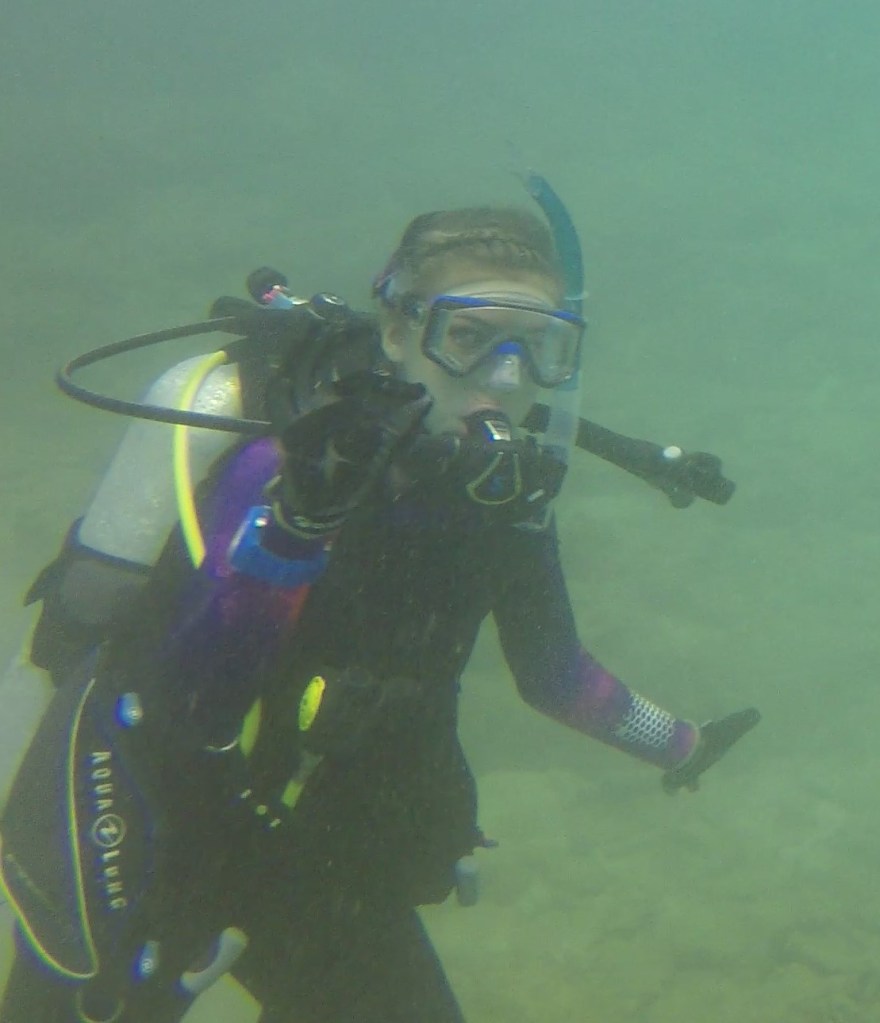
When I was stationed in San Diego a number of my peers took their Open Water scuba certification class. I was invited to join them, and I would have loved to go, but with Heather 39 weeks pregnant with Chipmunk, I decided against it. After arriving on Okinawa I was again presented the opportunity to take an Open Water scuba class. This time I was able to do it, and became certified as an Open Water diver, the lowest level of PADI certification. Open Water divers are certified to dive to a depth of 60 feet. I really enjoyed exploring this new underwater world and continued diving and exploring around the coasts of Okinawa. Once I had about 25 dives under my belt I made the next step in certification and took my Advanced Open Water class as well as the Deep Diver class. With Advanced Open Water I could now dive to a depth of 100 feet below the surface. Upon completing the Deep Diver class I was able to dive to the recreational diver limit of 130 feet below the surface. As an Open Water diver in the clear Okinawa water one can look up and see the sun and the surface and maybe even some waves on the surface. Once one dives down to about 100 feet you tend to lose sight of the surface and it is just a brighter shade of blue when you look up. This can be a little unnerving for some as they realize that if they have some issue it may be more difficult to simply pop to the surface to breath atmospheric air. At 130 feet the NDL (No Decompression Limit) is also pretty short, so I could only stay at that depth for about 10 minutes or less before I needed to ascend to a shallower depth. Exceeding the NDL requires a diver to make stops along their ascent to wait for a certain amount of time before ascending further. These stops allow the diver’s body to decompress, aka release dissolved nitrogen from their tissues and blood stream to prevent an air embolism, or bubble, from forming in their tissues or vessels. These bubbles can be very painful and can lead to altered blood flow to the brain or heart. In the worst case these bubbles can result in death, so respecting the NDL is very important as a recreational diver.

One of the dive sites along the Okinawa coast is the wreck of the USS Emmons, a World War 2 battleship that was intentionally sunk by the US Navy after it had been disabled to prevent it from falling into Japanese hands. This wreck sits on the ocean floor with a depth of 142 feet at the sand. The most shallow part of the ship sits at about 118 feet below the surface, so the wreck is deep and at the fringe of the recreational limit. This certainly limits the amount of time a diver can spend exploring the wreck. I had the privilege of diving the wreck, but knew I wanted to spend longer down on the wreck. Enter technical diving.

Technical diving allows divers to intentionally and safely exceed the NDL through proper planning, preparation, and training. Technical divers typically carry larger volumes of compressed gasses, redundant breathing systems, as well as extra tanks of mixed gasses with higher percentages of oxygen (up to 100%) to speed up the decompression process as they ascend. Technical divers pre-plan their dives and then dive that plan. This ensures they have enough breathing gas to safely complete the dive and have a reserve to use in case of emergency. I went through my technical diving class with a friend/coworker and we practiced many skills with each other underwater along the way. At the completion of technical diver training I am now certified to dive to a depth of 170 feet for as long as I feel like carrying appropriate volumes of breathing gasses with 21% oxygen or more. At 170 feet the water becomes this eerie twilight world and diving flashlights are recommended. With technical diving skills and certification in hand I was able to dive the USS Emmons again using a technical gear configuration and was able to spend about 35 minutes exploring the wreck instead of 10 minutes as a recreational diver, which was a huge difference! Additionally, because all the recreational divers had to head for the surface pretty quickly, I was able to spend the majority of the dive exploring the wreck with no other divers around except my buddy. I have truly enjoyed the added depth and length of dives available to me. As I descend popular dive sites with lots of corals I frequently see many broken pieces of coral between the surface and 60 feet, the range where the most divers are certified. Between 60 and 130 feet  I see a little less coral destruction as there are fewer divers certified to those depths, and as I pass below 130 feet the coral appears virtually untouched. It is at these deeper depths that I find the most enjoyment as I explore a landscape largely untouched by human hands and frequented by few. While technical diving is not for everyone, if you are a diver and consistently find your dives (especially deeper dives) being limited by your NDL, technical diving may be a new way to broaden your diving adventures.

Note: For anyone that is wondering, there are additional technical dive classes available beyond what I am certified for that introduce tri-mix (a mix of oxygen, nitrogen, and helium) with some mixes containing less than 21% oxygen which are suitable for the increased water pressures below 170 feet.

Underwater Pumpkin Carving

By Kevin

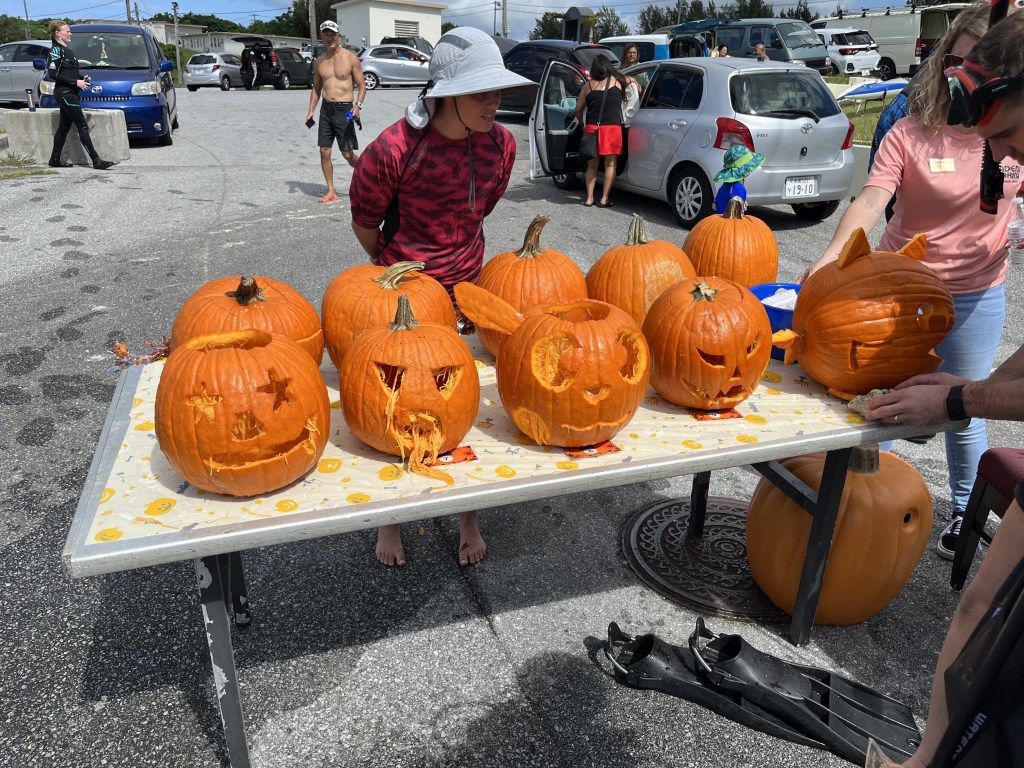
Since arriving in Okinawa, Japan I have been able to complete scuba diver certification, and enjoying the underwater world so much, I have also encouraged Heather, Pie, and Bug to become certified as well. These certifications have opened up a whole new world of experiences and opportunities for us. One of which has been underwater pumpkin carving. On a sunny Saturday in October Bug and I met the other 9 teams at Kadena Marina to compete. Once the first timer started we were able to cut a lid, remove the seeds from inside the pumpkin, and use a grease pencil to mark our design on the outside of the pumpkin. We were then issued an ice pick and a butter knife to complete our pumpkin. We geared up in our scuba kit, made our way to the water and descended to about 12 feet below the surface where we had 30 minutes to complete our pumpkin carving. This, of course, added some new degrees of difficulty. We had to keep a hold of the pumpkin to keep it from floating up to the surface, we had fish swimming through feasting on the discarded chunks of pumpkin, and we each had a scuba regulator in our mouth, so we could not speak to each other. We had to use hand signals and gestures to coordinate our carving efforts. The judges swam back and forth checking on the teams to ensure we were not cheating by adding extra dive weights to our pumpkin to keep it on the bottom, by using un-approved carving tools such as dive knives, or any other unfair advantages we may have thought up. At the conclusion of the 30-minute time limit we surfaced and made our way back to the beach. Our pumpkins were displayed and judged, and while we did not take home the trophy, it was an enjoyable unique event that many of Bug’s peers have not had the opportunity in which to participate.

Kerama Islands Dive Trip

The Kerama Islands are a cluster of small islands 32 kilometers southwest of Okinawa, Japan. Most of these small islands are uninhabited, yet offer a beautiful backdrop for boat trips to the crystal clear waters around them. While I have been able to dive quite frequently around Okinawa, sometimes accompanied by Heather, Pie, or Bug, I rarely get to dive with all of them at once since someone typically has to stay back to keep an eye on Miss Kicky Feet and Chipmunk while the others go diving. On this occasion, however, we were able to arrange alternate care for the little two and the four of us departed on a dive boat for the day to the small island chain. It did not disappoint! At the first location that we stopped to dive, I looked over the side of the boat and could see the bottom clearly. It looked as if we were in maybe 10 feet of water or less when in reality it was closer to 50 feet deep. We geared up and dropped into the water to explore the area. The reef was healthy, vibrant in color, and alive with fish and turtles. We spent almost an hour exploring before returning to the boat to head on to our next dive location. The second site was a little bit deeper than the first, but still just as clear. From the bottom we could look up and see the hull of our dive boat bobbing above us with perfect clarity. After exploring this site for about an hour we surfaced and boarded the boat. Since we had been under the boat during the beginning and end of our dive, we knew there were no hazards below the boat. With our Divemaster’s permission Bug proceeded to leap from the second deck of the dive boat into the water. Since he was still wearing his wetsuit but had shed his lead weights and other dive gear, once he jumped in, he popped right back up to the surface due to the extra buoyancy of his wetsuit. Of course Pie then decided she needed to try this too. After watching their two successful jumps pretty much everyone else on the chartered boat decided they too needed to experience the thrill of jumping from the upper deck into the water. This went on for probably 20 minutes or so before the captain decided it had gone on long enough and that the time had come to return to the dock on Okinawa. I really enjoyed being able to dive with Heather and two of my children, and the memory of leaping from the second deck of the dive boat will stick with us for quite a while. On the return trip the weather took a turn for the worse, which is always a possibility on a sub-tropical island. The waves grew in size, the wind picked up, and the sky turned darker. One of the other divers was sitting at the back of the boat fanning herself and trying to hold her nausea at bay. Pie, on the other hand, was not sea-sick at all and was actually leaning off the side of the boat with her head in the wind loving life much like a dog hangs its head out the car window into the wind. The stark difference between the other diver and Pie made me chuckle.

Manza Ocean Park

There are many water activities on the island of Okinawa, and while we have experienced many, we had not yet experienced Manza Ocean Park. This floating playground is comprised of multiple inflatable structures secured together and anchored to the sand with heavy concrete anchors along one of the island beaches. The structures vary from things one must climb over, climb through, and climb under while not falling into the surrounding waters. Some have swinging balls one must navigate around, which can be used to send a family member into the water if they are not paying close enough attention. The water under this course of inflatables is deep enough to not hit bottom if you fall, but shallow enough that an adult can touch bottom for about 1/3 of the course. This ocean park is operated and maintained by a hotel that is adjacent to the beach. We arrived mid-morning and played around on the structures for a few hours. Bug was like a little monkey bounding around the structures at blistering speeds. He challenged Heather and I to catch him, but we were hard pressed to do so. For lunch we dried off and walked over to the hotel for a 4 course meal that was included in the ticket price for the Ocean Park. After lunch we returned to the floating structures for a few more hours of play before we were all exhausted and the sun was preparing to set. We all dried off and changed into regular clothes but did not leave yet. The park and hotel sits along the west coast of the island and offered some stunning ocean views. We hung around and watched the sun setting over the ocean before piling back into our van and heading off to dinner.

It was a highly enjoyable day for all, and definitely wore all of us out. For anyone wanting to come to Manza Ocean park, I would suggest purchasing tickets ahead of time as they do sell out, especially on the weekends. Some of our neighbors decided to swing by while we were there, but were turned away due to being sold out. The structures themselves certainly would have supported more people, but the dining venues at the hotel limit the maximum tickets per day. I guess a collateral perk is that the play structures are never really overcrowded due to this limitation.

40 Days and 40 Nights of FEML

While we have certainly have enjoyed the people, places, and experiences we have had living in Japan, one drawback has been the ever-present COVID restrictions. While in the states life has regained at least some degree of normalcy, in Japan daily mask wear is still the norm and travel restrictions are still in place. That has meant that if we wanted to take leave in the continental United States (or other nations) we would have had to quarantine in Tokyo for two weeks upon our return (and on our own time and dime) prior to flying on to Okinawa. This has severely limited our ability to travel. It also meant that none of our family was able to come visit us during our time on Okinawa. Well, the military was certainly aware of all this and those in higher offices decided to help out. The military, across branches of service, authorized FEML, or Funded Environmental Morale Leave. FEML allows service members and their families to travel via military-contracted aircraft from Okinawa to Seattle, Washington at the expense of the government. Additionally, on our return to Japan we fly directly to Okinawa without the need to stop and quarantine in Tokyo. It was this program that recently allowed us to return to the United States for a visit after over a year living abroad.

Once in Seattle it was up to us to obtain commercial flights to our desired leave location. This sounds simple enough, except that about two weeks prior to our departure from Japan we got a notice that we needed to contact the airline. We went online and found out that our flight had been cancelled and that we needed to reschedule another one. We looked at available options and really couldn’t find one that we could all sit together. The best we could find was a flight that the older two kids sat by themselves and the two little kids were able to sit next to a parent. It was not ideal, but it got us to our destination. The flight was, however, a day after the military flight landed in Seattle, so we called a hotel in Seattle and made a reservation for the night for a room with two queen beds and a pull-out couch (enough for everyone to sleep comfortably). It was then the military’s turn to mess with our travel plans. We received notice about 2 days before we were supposed to leave that our military-contracted flight was delayed by 24 hours leaving Okinawa. This meant that we needed to contact the commercial airline and the hotel to adjust our reservations yet again. This time I called the airline and the most helpful agent (not sarcasm) assisted us in finding a flight that the whole family could sit together despite the website not showing any availability for that flight. Apparently the phone agents have extra magic that is not available on the website. Next we called the hotel, but the suite that we had reserved was not available for the night we now needed. We were able to wrangle a room with a single King-sized bed and a pull-out couch. Our final scare during transit came while we were sitting at the military terminal in Okinawa about 30 minutes prior to our re-scheduled departure. The overhead speakers clicked on and we heard “We are very sorry to inform you…..”. There was a collective gasp from those waiting in the terminal anticipating the worst as we had already been delayed for 24 hours once. Would they do it again?!  “We are very sorry to inform you that your flight departure has been delayed by one hour”. There was an audible sigh of relief from everyone listening. I think that was the happiest we had ever been about a 1 hour delay. The rest of the military flight went without incident.

Our next logistics hurdle came when we arrived in Seattle. Living on a island, almost all of our mail is flown in. This, however, means that certain items are restricted from delivery to include lithium batteries due to their risk of spontaneous fire. This in turn means that unless one desires to buy a Japanese cell phone it is almost impossible to upgrade one’s phone while overseas. With the recent Sprint/T-mobile merger both Heather and I needed at the least a new SIM card if not a new phone for our service to continue working. Well, the towers in Japan continued to work perfectly for us despite our “outdated equipment”, but upon landing in Seattle our iPhones were reduced to iPods. They were unable to access the cellular network at all. That meant that we had to figure out how to contact the hotel shuttle to come pick us up from the airport. Since practically every adult (and most of their kids nowadays) has a cell phone the need for payphones has all but died. That left us in a predicament at the airport as we had no cell service and there were no payphones. After some asking around, we found out from a customer service agent that there was a courtesy phone in the parking garage that would only call pre-determined hotels and cab services. It was like living in the 90s again. I don’t say all this to complain. After all, we had just been given thousands of dollars worth of airfare funded by the U.S. taxpayers. It just makes us appreciate thing we take for granted sometimes like jumping on an airplane to visit grandma with our only inconvenience of turning our devices to airplane mode while on the plane. Anyways, we were able to contact our hotel and the shuttle came to pick us up. Now, living in Japan for over a year driving on the left side of the road with the steering wheel on the right side of the car made riding in the front passenger seat in the states feel really weird! Once at the hotel we all collapsed for a 2 hour nap before venturing out on foot for dinner and new SIM cards so our cell phones would work again.

Once we made it back to Ohio to visit family, we certainly made our rounds. We were in the states for a total of 40 days, during which we made many stops. We visited Malabar farm to interact with farm animals and enjoy the vendors that were set up for their Farm Day celebration. We enjoyed the water slides and wave pool at Cedar Point Shores water park. We felt the thrill of riding some record-breaking roller coasters at Cedar Point amusement park. We visited the many animals at the Columbus Zoo. We also got out to enjoy nature for a while by taking a hike in the woods along the shores of the Mohican dam and river. Just prior to our arrival there had been quite a wind storm in Ohio, so we also spent some time helping Heather’s family get downed trees cut up with a chainsaw and some brush burned. I also spent some time on the tractor with the bushhog getting a field mowed. While I don’t mind the city, I do enjoy working around the farm still, and this was my opportunity to help out with some tasks that had been neglected.

While we were in the states I had the opportunity to fly to Texas and spend 10 days attending Combat Casualty Care Course. This course taught and reinforced the skills needed to care for patients in a military combat setting. The class completed classroom instruction, skills stations, and field exercises that allowed us to test our new skills through practical scenarios. My classmates were a mix of not only Navy personnel, but also Army, and a few foreign military medical exchange students from Korea and Germany. If any military medical personnel are reading this and are able to attend, I would highly suggest seizing the opportunity! At the conclusion of the course I was able to meet up with a fellow Navy nurse that I had worked with in San Diego that was attending a different course of instruction in San Antonio, and the two of us roamed the San Antonio River Walk, had a beer at the oldest Veterans of Foreign War (VFW) post in Texas, and ate some true Texas barbeque before departing for our separate destinations. The longer I am in military medicine the more people I know stationed all over the world and the more I am able to take advantage of meet-ups like this one.

Luckily the return trip from Ohio to Seattle to Okinawa was without issue and went as planned. No more logistics issues were encountered enroute. We certainly were thankful for the opportunity to visit friends and family in the states, but at the same time there is just something nice about being back in our own house and sleep in our own beds. While away on this trip, I had learned that I had been selected to lead a new section at work, so I had plenty to learn and get caught up on as I settled into my new work routine and position.

Ta-Taki Falls

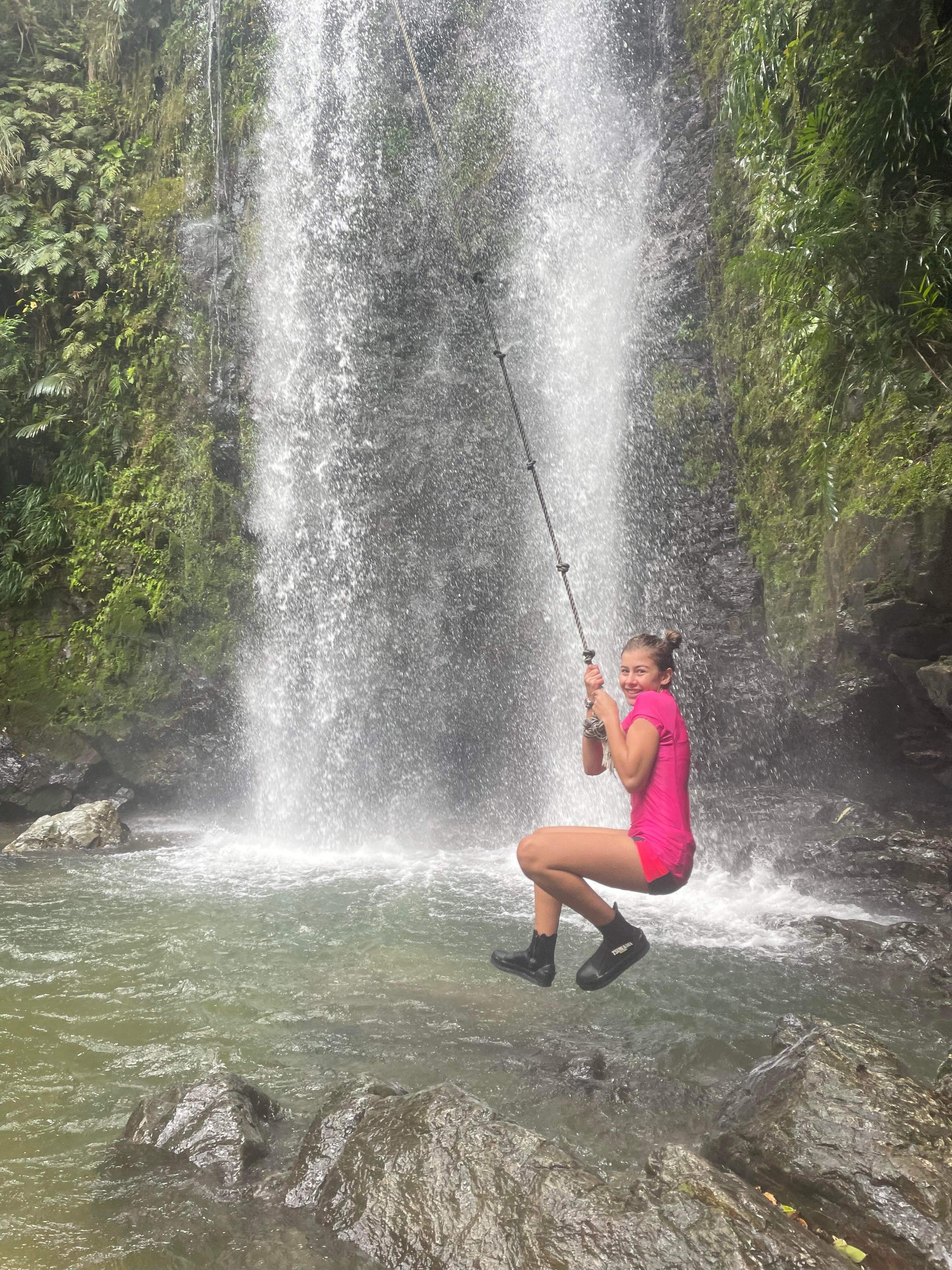
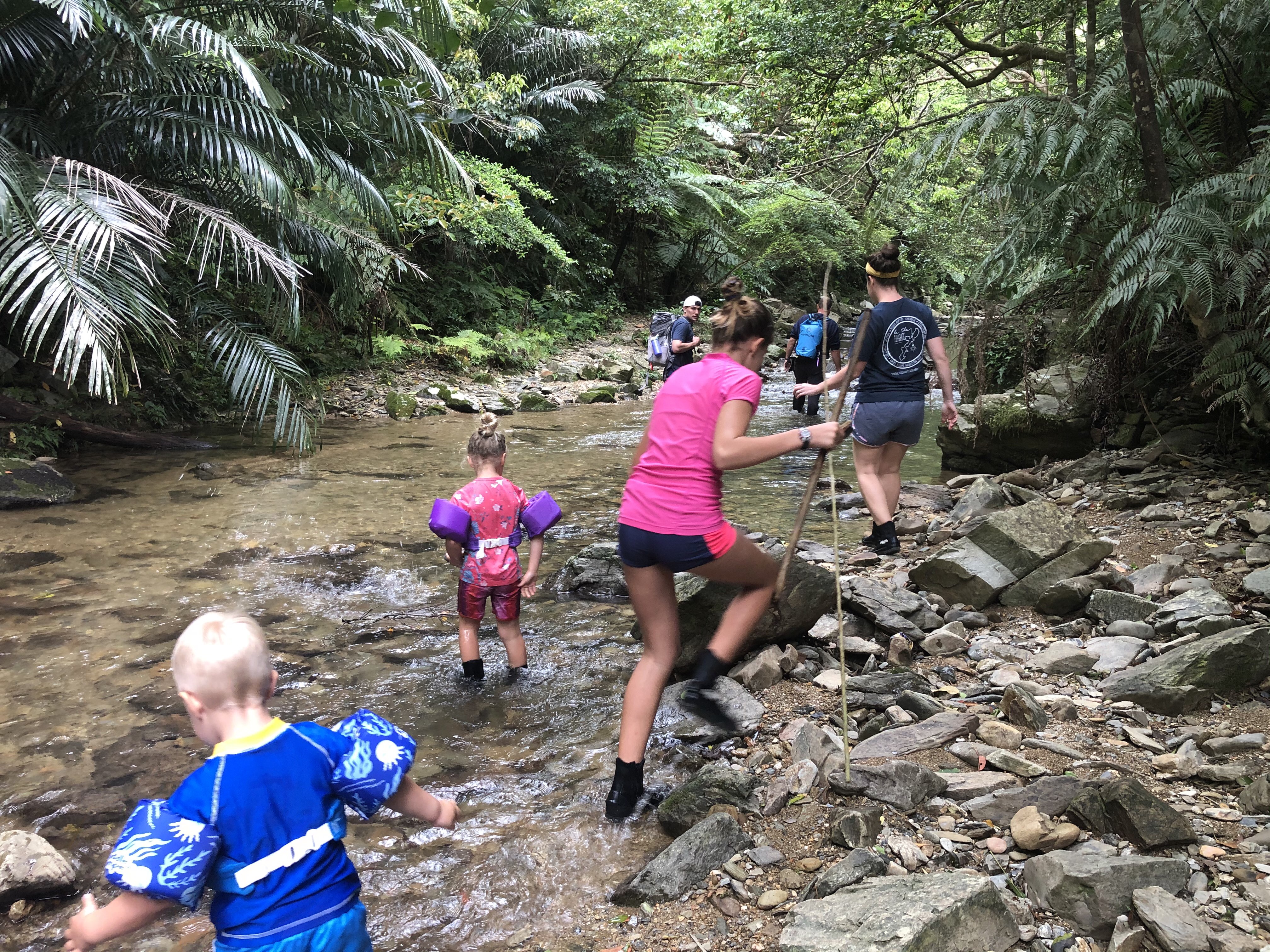
Yesterday we and some very good friends of ours went to Ta-Taki falls, a natural waterfall in northern Okinawa. Once there we walked up a small paved road to the river entrance and proceeded to river trek up the water for about 3/4 of a mile to the falls. The reviews claimed one could make it from the parking lot to the falls in 30 minutes, but with 4 children under the age of 6, our contingent was not that speedy. The river was mostly knee-deep or less with a few deeper spots that could mostly be avoided by climbing over the rocks on either side of the river. Once at the falls the smallest children were a bit chilled as the water was not the warmest on April Fools Day, which allowed the bigger kids and the young-at-heart to play with less concern for small people safety. The little people huddled under dry towels and demolished a bag of veggie straws while the big kids and parents tried out the rope swing and swimming hole at the base of the falls.

Adding Another Bubble Maker

By: Kevin

When we arrived in Okinawa last year we were told there is world-class scuba diving here. We also were educated about all the aquatic life that could injure us in the waters around Okinawa. It took us a few months to determine the true safety of the water, but once we made it past that, we have been exploring the water ever since. I, Kevin, got scuba certified in September of last year, and Heather followed suit in October. Well, now we have a third diver in the family, Pie. Pie successfully passed her Open Water scuba certification this month!

Heather and I have really been enjoying exploring the many colors of the reef, the fish and other aquatic life that live here, and the adventure of being 60 feet under the waves, an area previously inaccessible to us. We have found fouled anchors that had to be cut free from whatever vessel they previously held, discarded sections of large pipe, a Japan Post mailbox, and even a Tiki man carved into the side of a reef that supports a river channel marker. We knew that if we passed up the opportunity to allow the kids to become certified we, and they, would most likely regret it.

Japan Post Mailbox (40′ underwater)

Pie did very well in her class, even showing up her adult classmates in book knowledge and completed her pool and ocean dives successfully. Pie’s instructor was kind and patient and even allowed me to tag along for fun as Pie completed her class ocean dives. I cannot wait to be able to explore the waters with her and see her reactions to the things we find underwater. In the near future, once he finishes with his soccer season, Bug is excited to start his training for scuba diving as well.

Ice Ice Baby

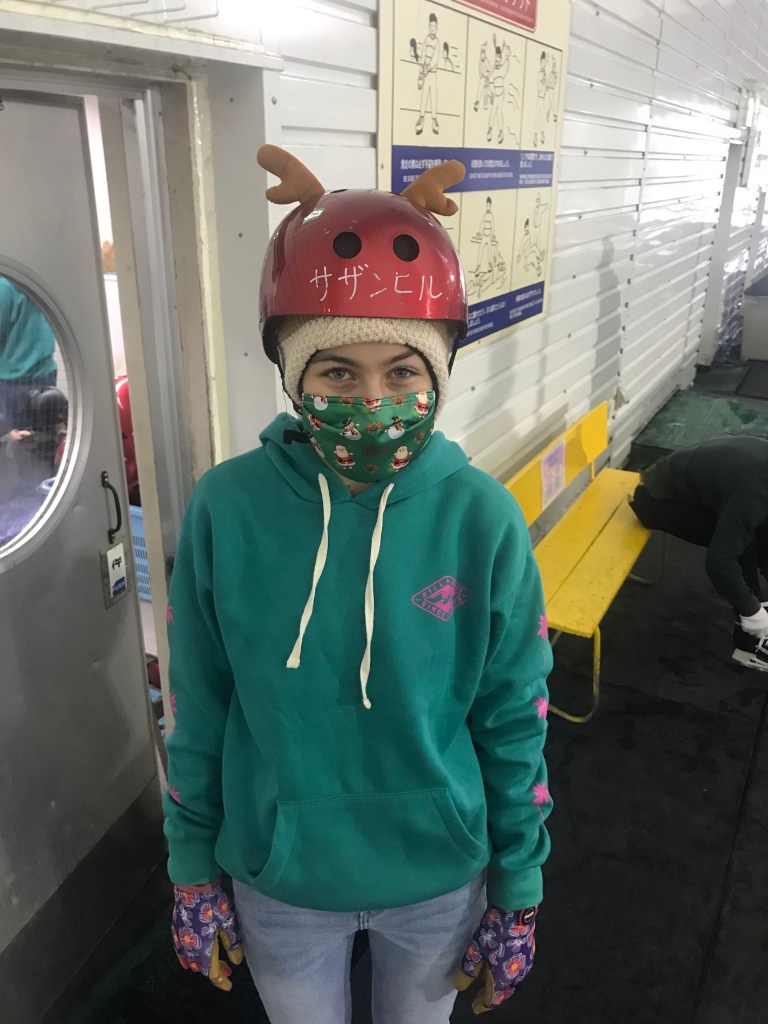
When one wonders what to do on rainy dreary day on a sub-tropical island what else comes to mind except…….Ice Skating! OK, well, maybe that is not the FIRST thing that may come to mind, but that is exactly what we did on a rainy Monday holiday. Located in a very well insulated building in Naha is a public full-sized ice rink. While we have ice skated before (in San Diego of all places) it took a bit of time to dust off our skills on the ice. Then we spent the next few hours spinning in circles, playing tag with each other, and helping Miss Kicky Feet who was a little slower to regain her confidence on the ice. Chipmunk was not a huge fan of his ice skates and preferred to be pushed around in a plastic toy car that had been fitted with metal runners and handles for an adult to push around the rink.

Chipmunk, Miss Kicky Feet, and Mom

Bug, who was wearing a pair of new blue jeans, found that when he fell and slid on the ice his jeans had enough extra dye in them that he would leave blue streaks on the ice. This of course became a game of how long of a blue streak he could leave on the ice.

Blue Jeans streaks on the ice rink

The only thing that really detracted from the experience was that we all still have to wear masks here on island for COVID mitigation, and after exhaling warm breath into cloth masks for a few hours in a freezing environment our masks became rather full of condensation and increased our work of breathing. However, masks or not we all had a good time and would come back again in the future.

Reindeer antlers poking through Pie’s helmet

Before we left we found a vending machine in the lobby that offered cans of hot chocolate (well played ice rink, well played) so the kids asked in their sweetest voices if we could please have some. We agreed and proceeded to buy the last 3 cans the machine had to offer.

Indiana Jones Adventure Trail & Ryukyu Glass Village

‘Twas the Saturday before Christmas and the children were restless…..so we jumped in the van and headed out for adventure.

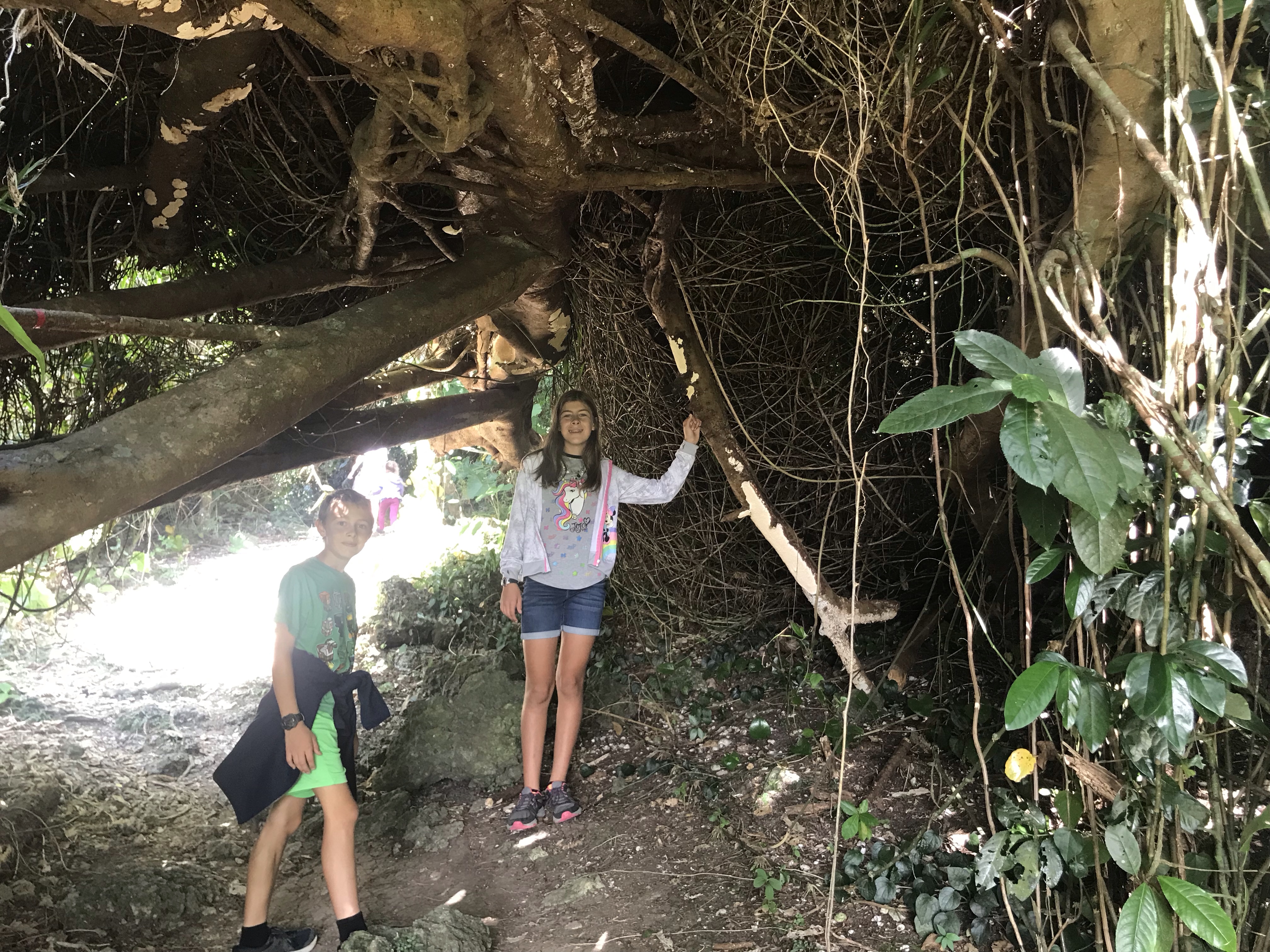
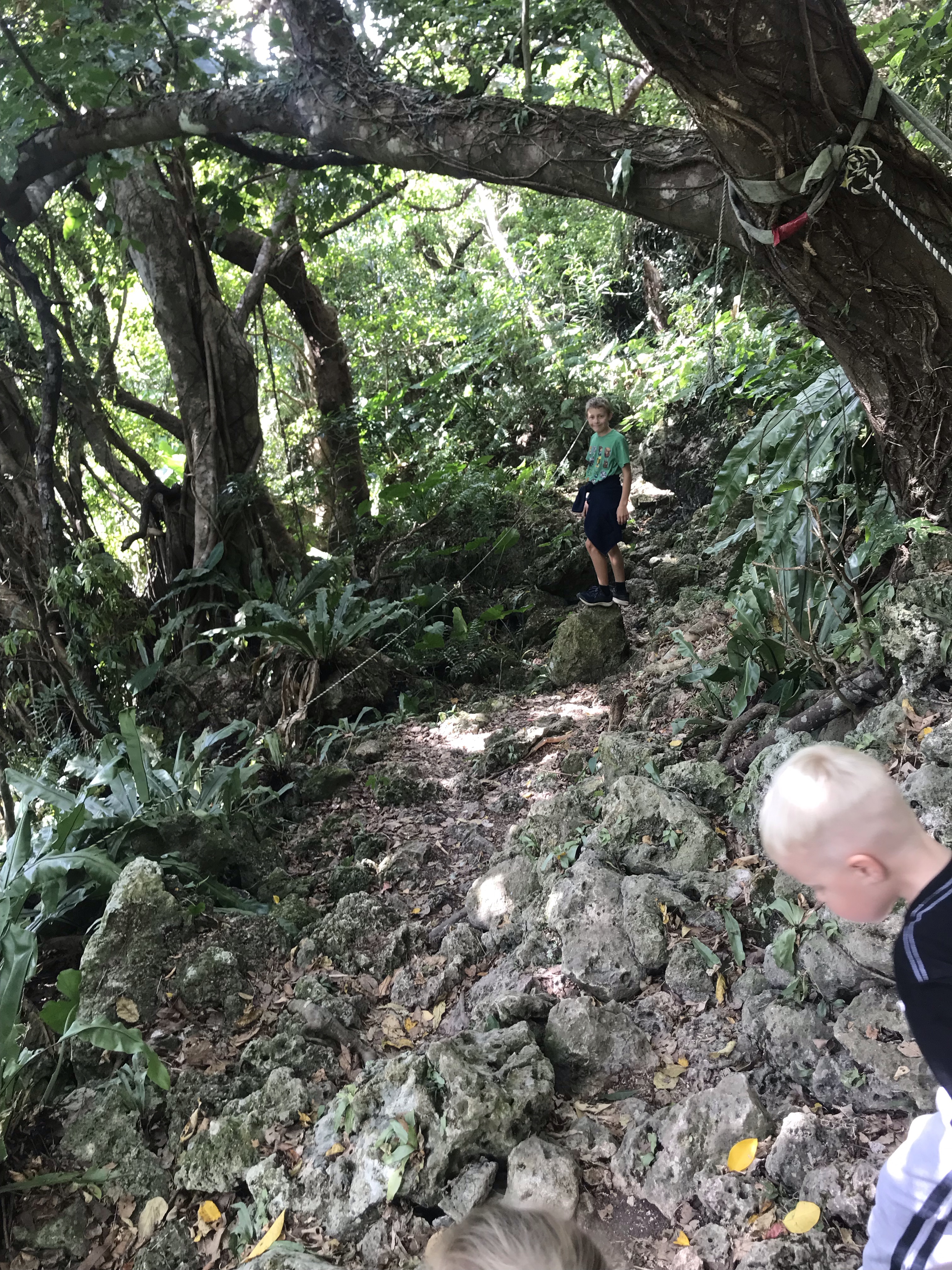
Our first stop was at the Indy Jones Adventure trail, a 1-mile nature trail full of ups and downs through the jungle and rocks of southern Okinawa. There were at least two places we used thick ropes to help climb the jagged rock along the trail. We knew the length going in, but were pleasantly surprised at the amount of climbing we had to do. It was anything but a wide handicapped-accessible path through some greenery. It took us about an hour to navigate the loop trail and check out the Tamagusuku castle ruins that spur off to the south from the Adventure trail. The views were gorgeous as we overlooked the ocean and town below. The foliage was thick and intertwined, but still allowed ample sunlight through. If the description hasn’t won you over already, I would definitely recommend you grab a pair of hiking shoes and try out this trail. It will not disappoint as a family outing.

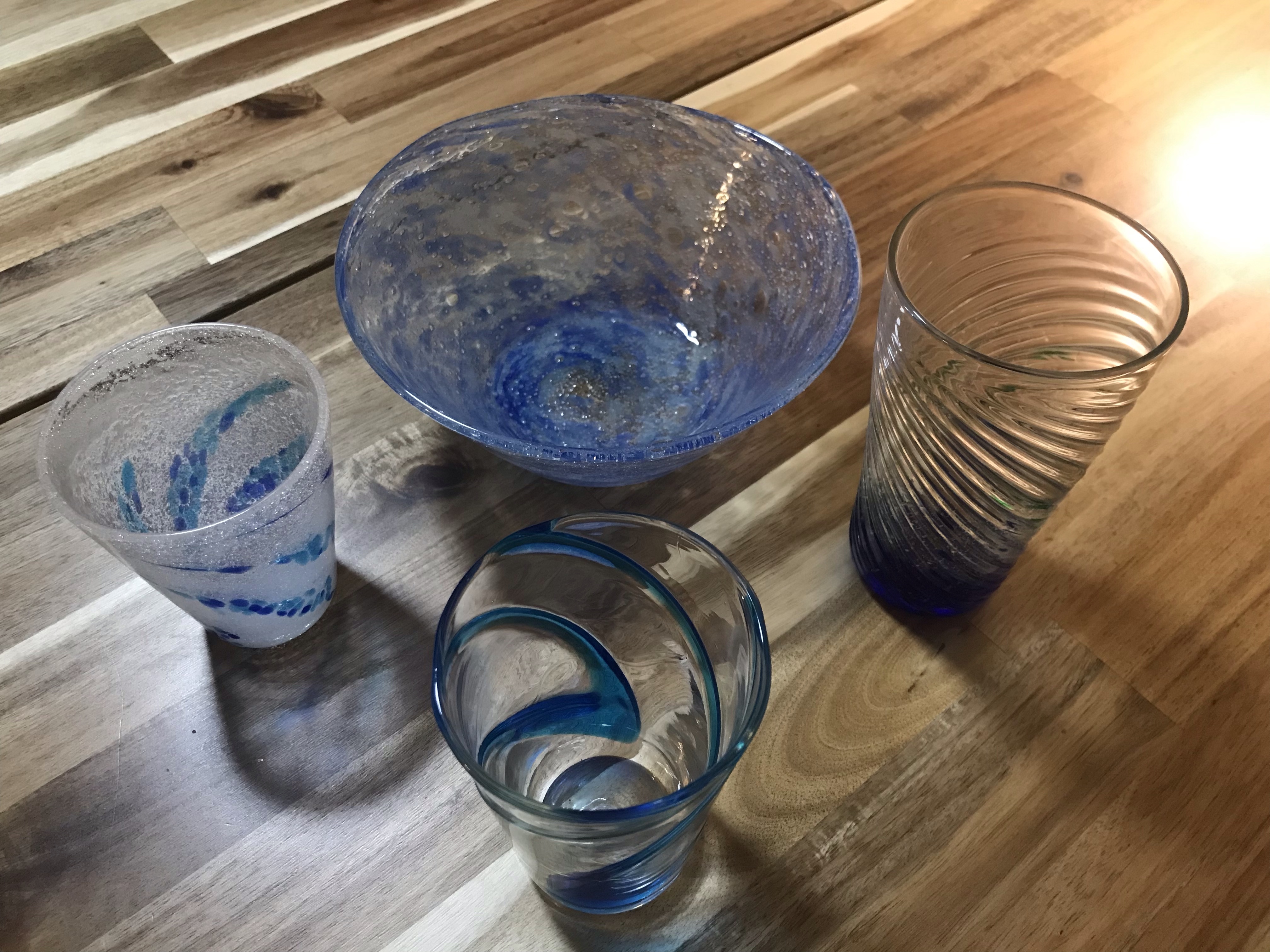
The second stop of the day was at the Ryukyu Glass Village in Itoman. We really lucked out because it just so happened that they were having their Christmas celebration with cultural dance group performances, local food trucks, extra discounts at their outlet store, and vendor tents around the perimeter of their Glass garden. While Chipmunk napped in the stroller we were impressed and entertained by the Suzaku creative dance company as they presented traditional Okinawan dances with drums and weapons.

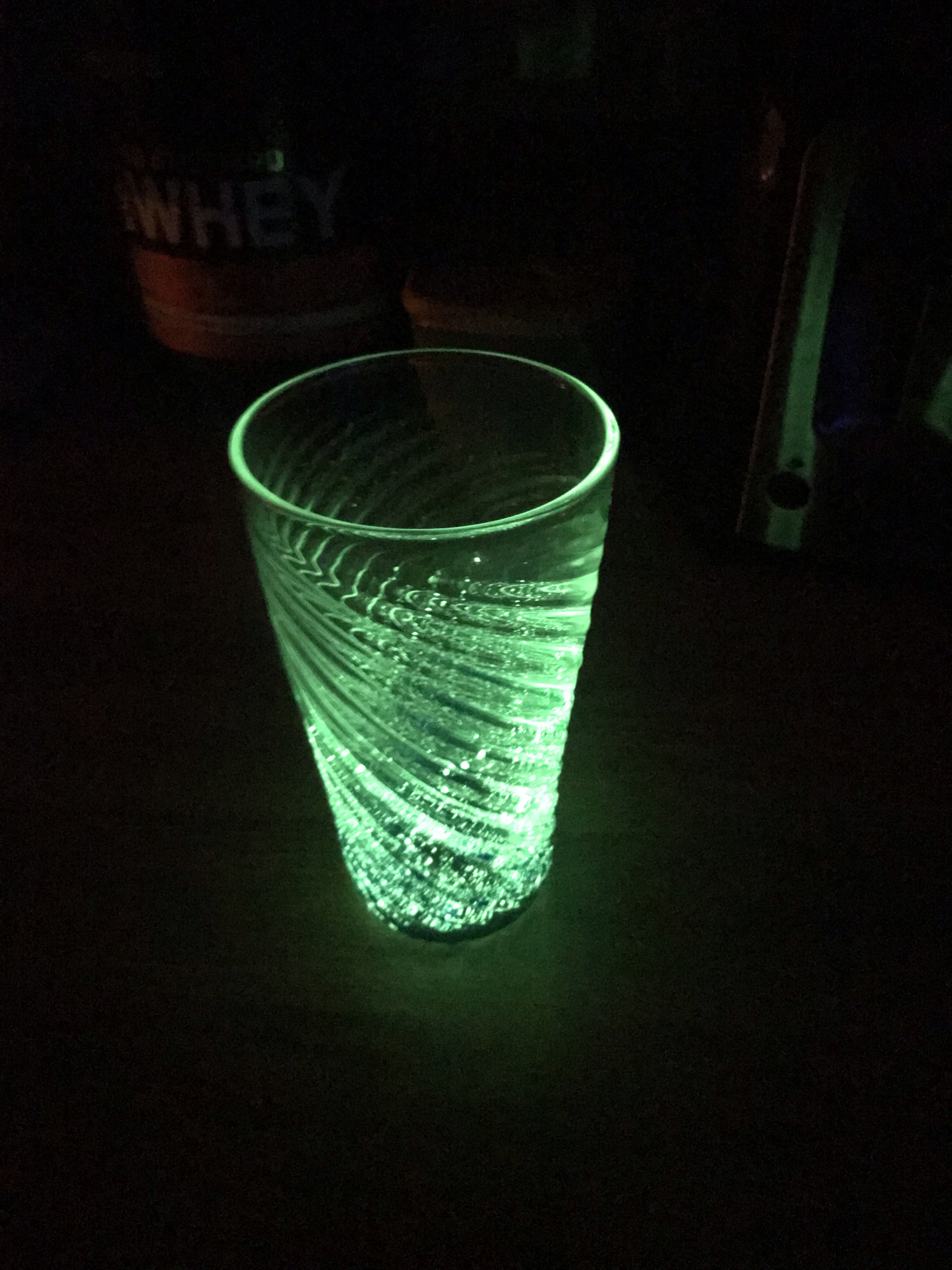
We explored the shops and vendor tents, and even sampled some steamed squid from one of the vendors, although the kids were not as enthused about that part. Much of the glass that is sold at RGV is hand-blown on site with an open-air viewing area that visitors can watch as artisans create unique pieces from blobs of glowing molten glass before your eyes. We even purchased a few of the pieces from their store. Much to my surprise after getting home, not only is the swirled glass cup that I chose beautiful, it even glows in the dark! How cool is that?

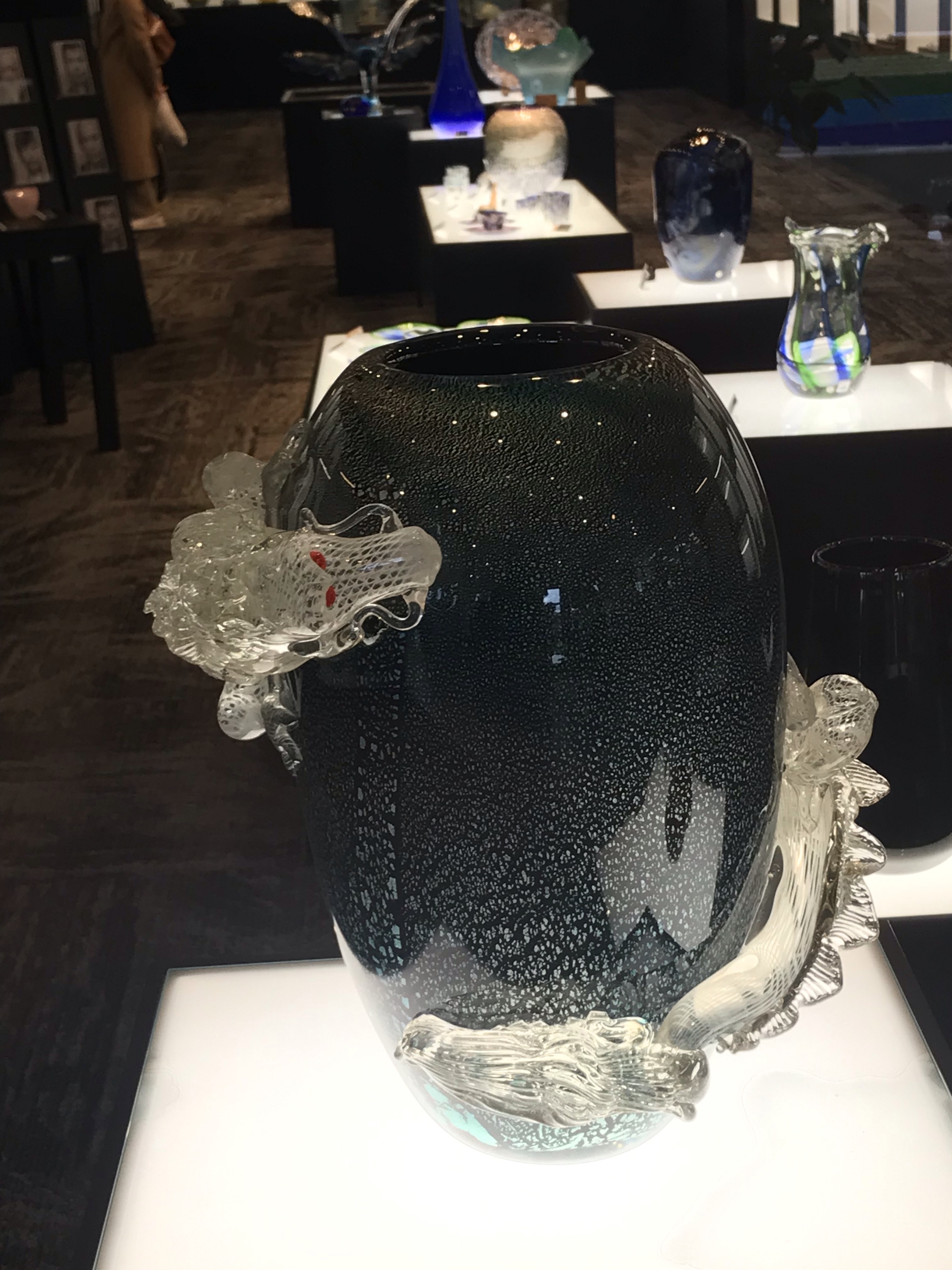
The amount of detail that goes into some of the pieces we found in their store was amazing, however it was a little nerve-wracking guiding 4 children through an entire store of one-of-a-kind fragile things. We did, however, escape unscathed and only purchased that which we chose to bring home.

Dragon Vase
Glass whales

Shuri Castle

History of the Castle

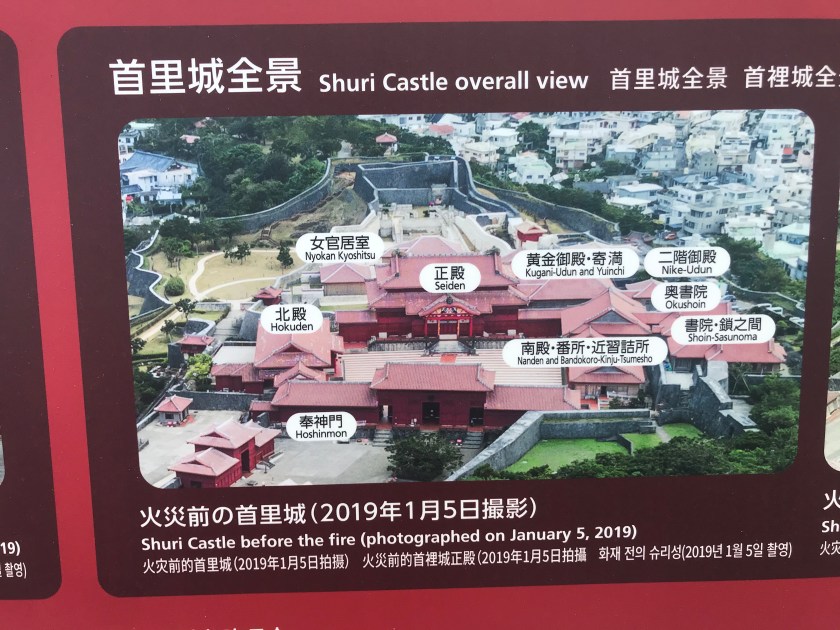
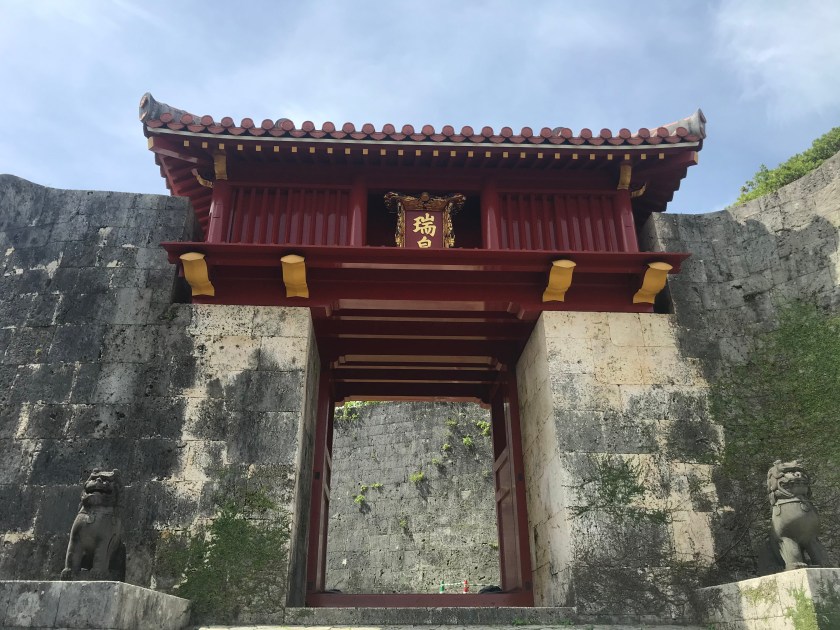
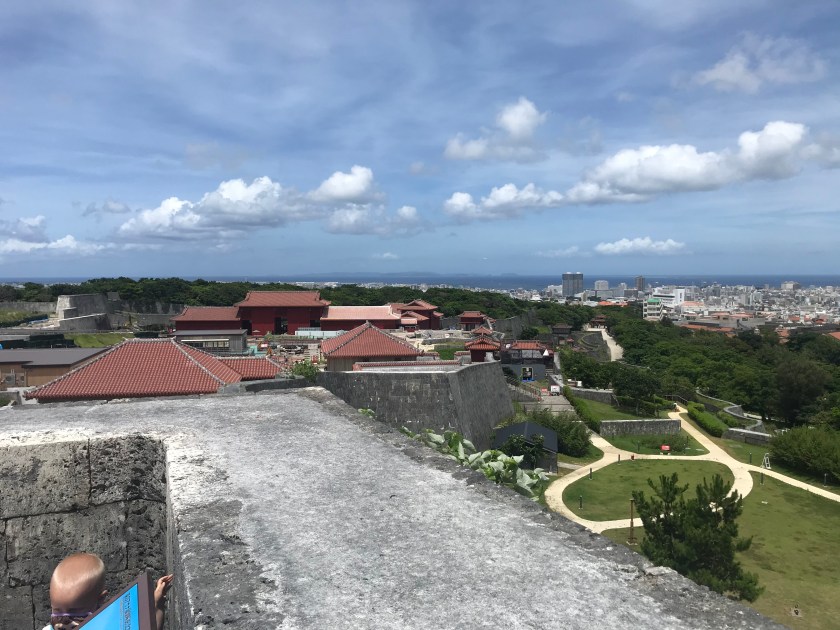
Shuri Castle has had a rough history. Between 1429 and 1879, Shuri Castle was the palace of the Ryukyu Kingdom, the prominent power of the era before becoming neglected for over 60 years. Then in 1945, during the Battle of Okinawa, it was almost completely destroyed by the United States’ bombing of the island from the naval fleet. This was in no small part due to the Japanese 32nd Army making the castle a command post and an obvious target for the American military. After the war, the castle was re-purposed as by the University of the Ryukyus as a campus from 1950 until 1975. Beginning in 1992 the castle was renovated and the central citadel and walls were largely reconstructed on the original site based on historical records, photographs, and memory of those still living from its prior grandeur. In 2000, Shuri Castle was designated as a World Heritage Site, as a part of the Gusuku Sites and Related Properties of the Kingdom of Ryukyu.
Fires

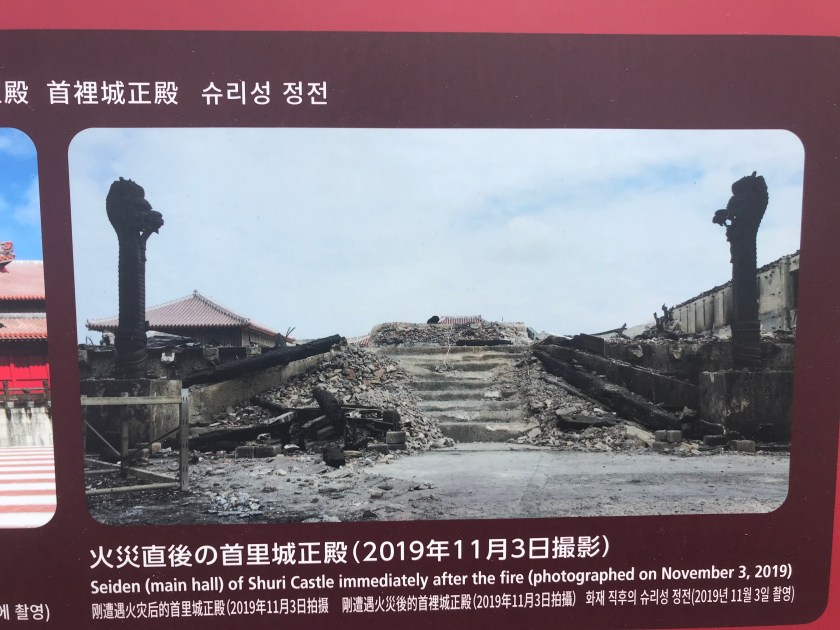
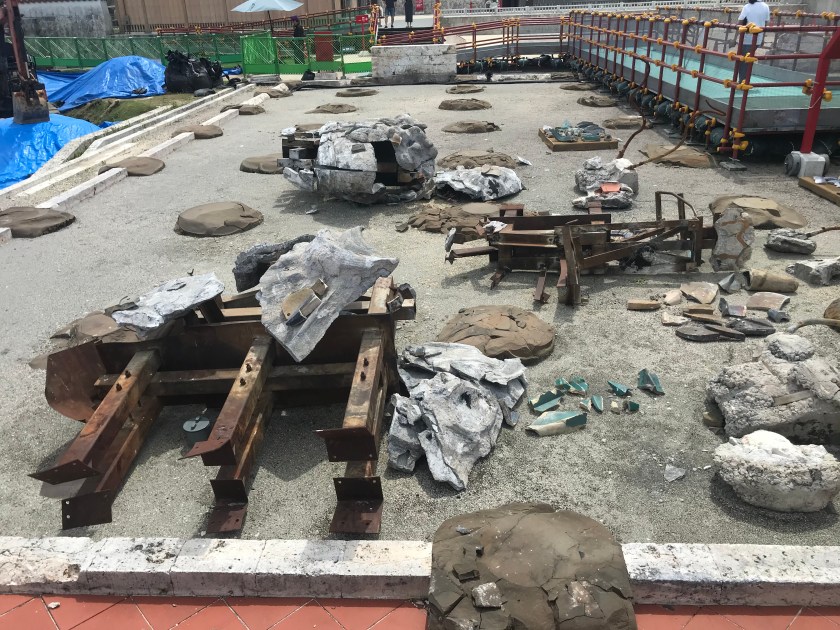
Shuri Castle has been no stranger to fire. It has been recorded that the castle suffered significant fires in 1660 and 1709 in addition to a few smaller fires over the years. Each time the castle was rebuilt to its original form. The latest bout with fire began in the early morning hours of October 31st, 2019 when six of the main courtyard structures of the castle were again destroyed, consuming approximately 45,000 square feet of structure. The fire was not declared out until around 1:30pm that day. This was not only a physical loss for the castle renovation team, but also a psychological blow as the most recent renovation project had just been completed in early 2019. Fire has long been a challenge for the castle buildings due to its wooden structures and interiors made of Japanese cypress, cedar, and red pine. Additionally, due to the Japanese’ commitment to keeping the castle in original form, no visible fire sprinklers or suppression systems appear to have been installed in any of the historic castle structures.

Current Castle

The sections of the castle that still stand were built to the exact standards as the castle of old, even down to the interior spaces. Some areas of the castle are closed to the public, not because they are used for a different purpose, but rather because historians have not been able to determine how the rooms were arranged and without this data they do not want to misrepresent the spaces to visitors. This is the level of detail to which those responsible for restoring the castle hold themselves. After the 2019 fire those affiliated with the castle once again vowed to reconstruct it yet again with a projected start date sometime in 2022 with a goal to complete it by 2026.

Our Experience

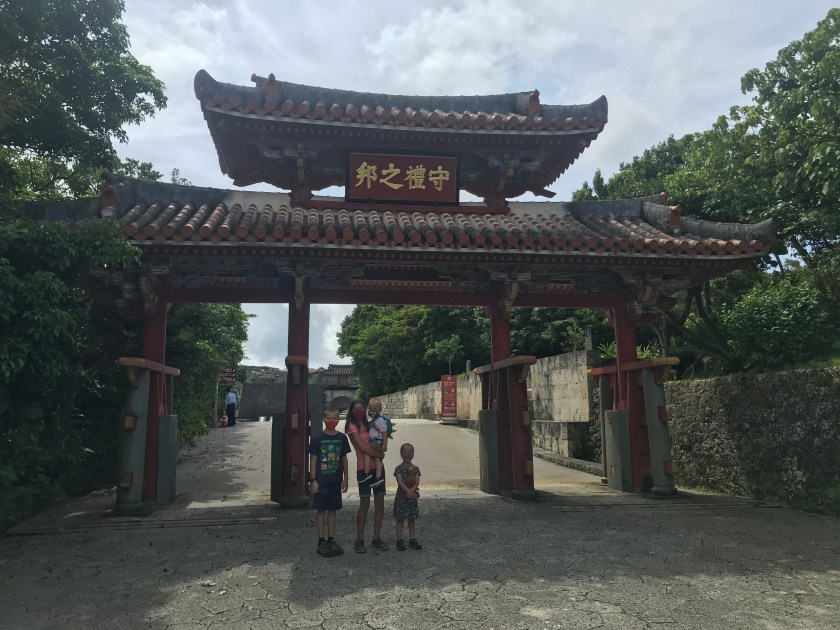
While a number of the interior castle buildings are obviously still missing we were able to tour the various courtyards inside the massive limestone walls and see artifacts of the castle both protected inside new temporary structures, but also carefully arranged outside on pallets awaiting reconstruction efforts next year. There were also video documentaries of the castle before, during, and after the 2019 fire that gave a pretty good idea of the castle, even if we didn’t get to see it in its full glory. I was glad we were able to tour the remaining sections of the castle even if we didn’t get the same experience as others who were able to tour it in early 2019. It took us a few hours to get through the entire site, but I wouldn’t recommend anyone allot more than a half day to this location until the reconstruction is complete in a few years from now.